Leading Potato Frozen Food Products Manufacturer
16 April, 2024
The frozen food industry has transformed the way the world eats. With increasing urbanization, rising working populations, and the rapid growth of quick-service restaurants, global demand for frozen foods has surged like never before. From fast food chains to retail supermarkets and cloud kitchens, frozen products are now a daily necessity.
In this evolving landscape, global buyers are actively searching for sourcing destinations that offer the perfect balance of quality, affordability, safety, and supply reliability. Over the last decade, India has emerged as one of the most trusted sourcing hubs for frozen food products. With its strong agricultural base, modern processing infrastructure, and export-driven manufacturing ecosystem, Indian frozen food suppliers are becoming preferred partners for international food brands and distributors.
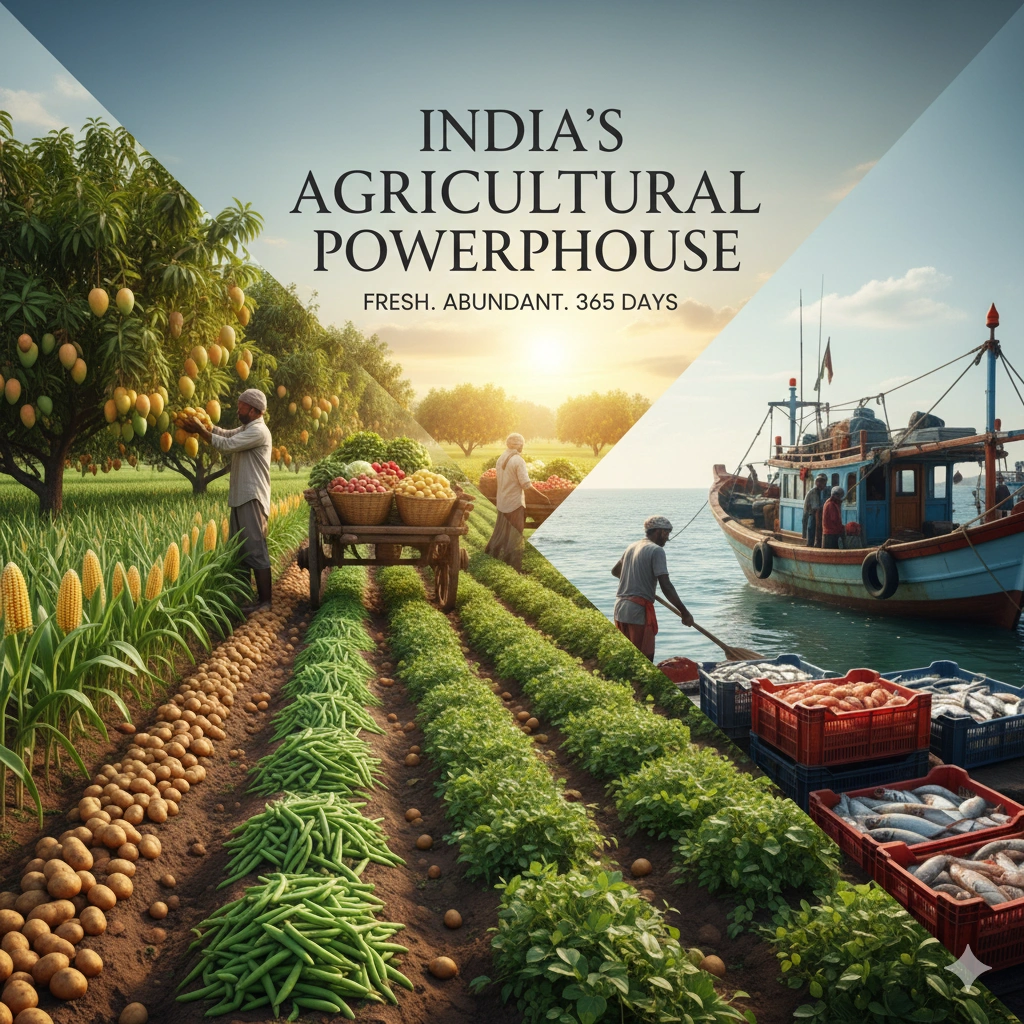
India ranks among the world’s top producers of key frozen food ingredients potatoes, green peas, sweet corn, mixed vegetables, mangoes, and seafood. With multiple harvests per year across different agro-climatic zones, Indian frozen food suppliers enjoy uninterrupted access to fresh, high-quality raw materials 365 days a year.
This natural advantage eliminates the seasonal shortages that buyers often face when sourcing from single-crop countries. Whether a global buyer needs frozen French fries in January or frozen mango chunks in December, Indian manufacturers can deliver without price spikes or quality dips.
One of the biggest reasons international buyers prefer sourcing from India is cost efficiency without sacrificing product standards. Lower cultivation costs, optimized labor structures, advanced automation, and government-supported food processing zones give manufacturers a natural pricing advantage.
However, modern exporters no longer compete merely on pricing. They invest heavily in machinery, hygiene systems, internal audits, cold storage, and export-grade packaging. This allows buyers to access premium quality frozen food products at competitive international prices making India one of the best cost-to-quality sourcing destinations in the world.
Indian frozen food manufacturing has evolved rapidly with the adoption of world-class processing technologies. The backbone of this transformation is IQF (Individually Quick Frozen) technology. This process freezes each piece separately, preserving natural texture, taste, structure, and nutritional value.
In addition to IQF, advanced systems for washing, peeling, cutting, blanching, coating, par-frying, and blast freezing ensure uniform product quality across batches. Automated grading and sorting reduce human error and increase consistency. For restaurant kitchens and retail shelves alike, this means dependable performance in every use.
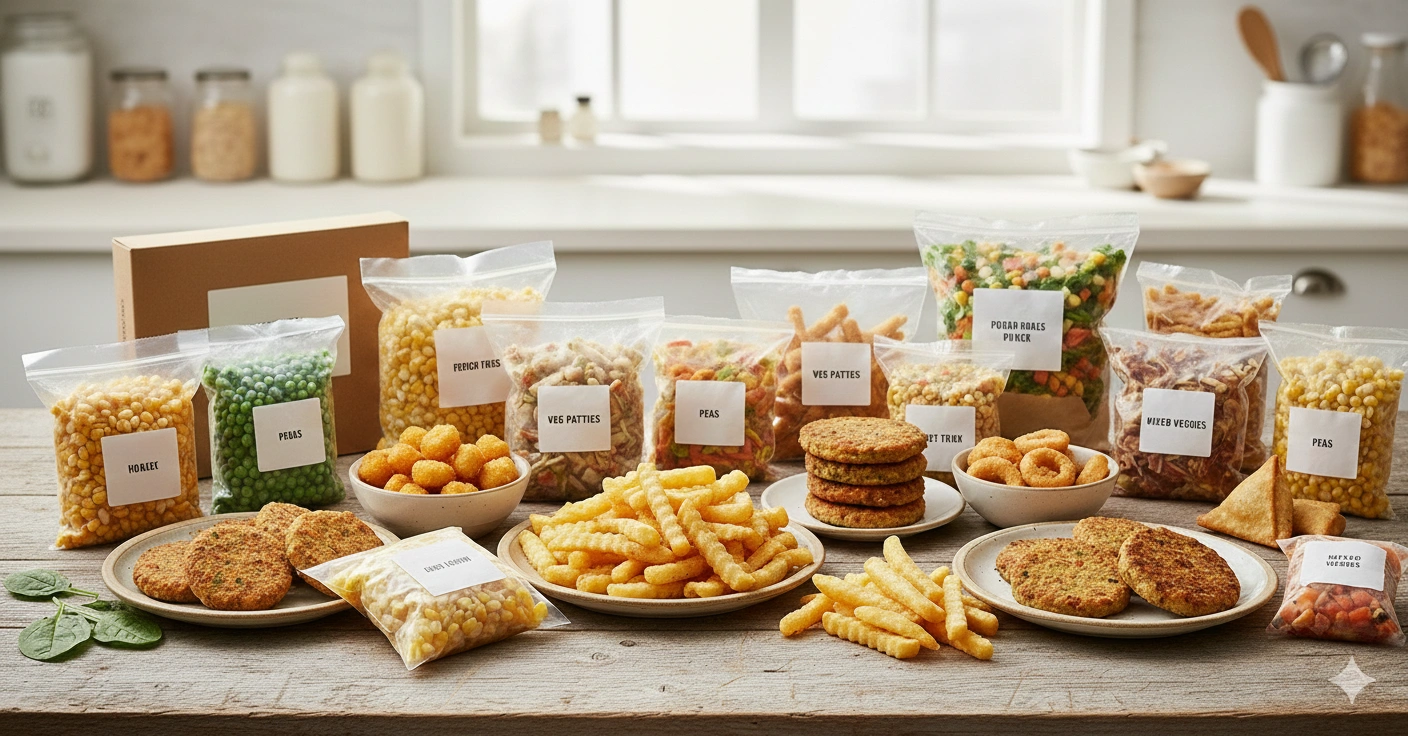
One of the biggest advantages of sourcing from India is the highly diversified product portfolio available under one manufacturing ecosystem. This includes a broad range of frozen food products such as:
Frozen French fries in multiple cuts
Potato nuggets and hash browns
Veg patties and snack appetizers
Aloo tikki and coated snacks
Sweet corn, peas, and mixed vegetables
Buyers also benefit from customization in thickness, cut styles, seasoning profiles, and coating performance to suit regional taste preferences and operational needs.
Food safety is non-negotiable for modern international trade. Leading frozen food exporters in India operate under globally accepted compliance frameworks such as HACCP, ISO, BRC, FSSAI, FDA, and Halal certifications.
These protocols ensure that every stage from farm procurement and washing to freezing, packaging, storage, and shipping is monitored under strict hygiene and traceability standards. Regular internal audits, third-party inspections, and documentation ensure that products move across borders without compliance risks or regulatory delays.
Indian frozen food suppliers offer complete flexibility in packaging and branding to suit different business models. Buyers can choose from bulk industrial packs for foodservice distribution or retail-ready consumer packaging for supermarket sales.
Options include private labeling, multilingual nutritional information, barcode integration, and export-compliant printing. This allows brands to scale confidently without investing in manufacturing infrastructure. Many retail frozen food suppliers globally rely on this model to build dedicated private brands efficiently.
India now boasts one of Asia’s most advanced refrigerated logistics networks:
Temperature-controlled warehouses near farms and ports
Dedicated reefer trucks and GPS-tracked containers
Major ports (Mundra, JNPT, Chennai, Vizag) with plug-in reefer yards
Fast transit times: 7–10 days to Southeast Asia, 18–25 days to Europe, 25–35 days to North America
Real-time monitoring and 98%+ on-time delivery rates ensure frozen food export from India arrives in perfect condition every time.
A major reason India appeals to both new brands and established food chains is its flexibility in order volumes. Buyers can begin with small trial orders for market testing and gradually scale to large bulk volumes as demand grows.
This ability to offer both controlled testing quantities and large bulk frozen food supply makes Indian manufacturers suitable for startups, distributors, and multinational food brands alike.
Indian exporters are widely known for their relationship-driven business approach. Rather than focusing on one-time transactions, suppliers emphasize transparency, predictable production planning, consistent quality control, and dependable communication.
Over time, these collaborations evolve into stable long-term sourcing partnerships where suppliers prioritize buyer needs during peak seasons and raw material fluctuations. This reliability is one of the strongest reasons global buyers continue renewing contracts with Indian manufacturers year after year.
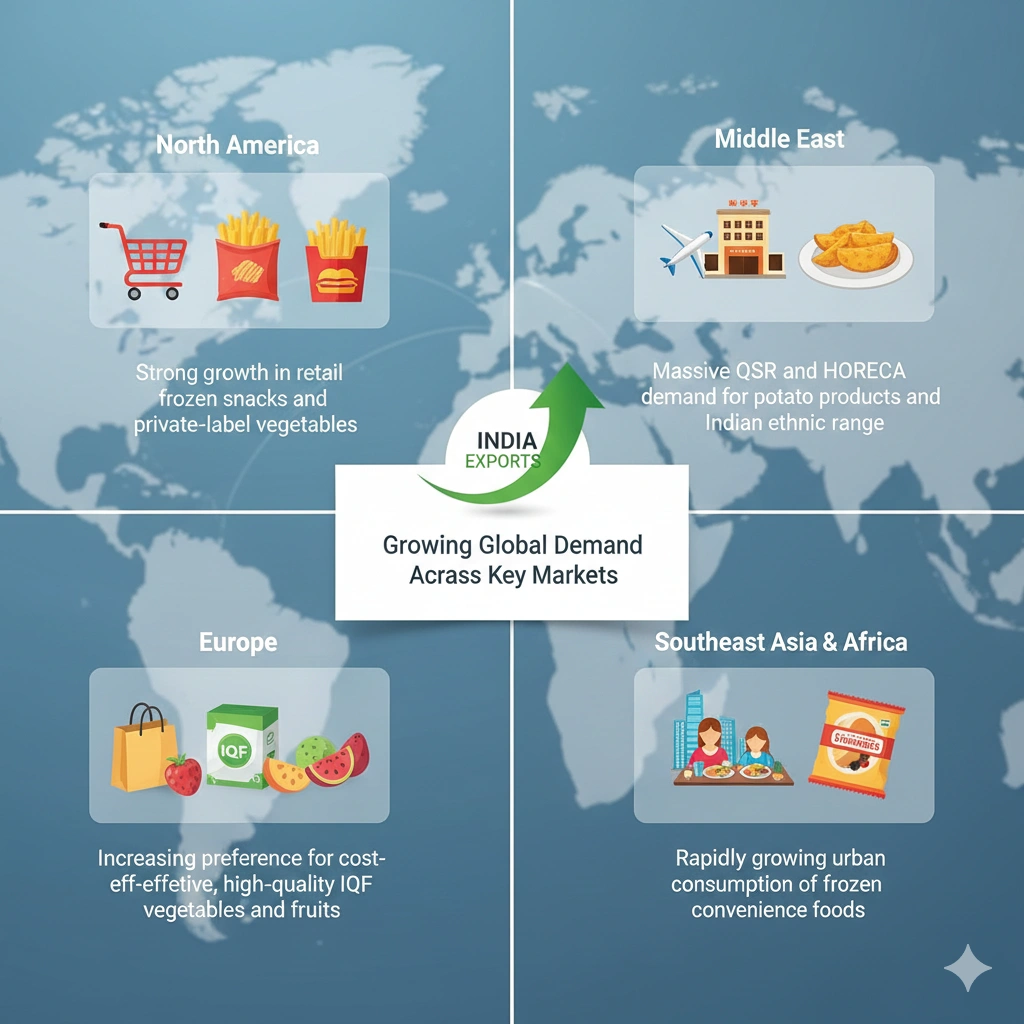
Demand for Indian frozen food continues to expand across multiple regions. North America leads with strong retail and QSR demand, while the Middle East dominates in hotel, airline catering, and quick-service dining. Europe continues to grow steadily through supermarket and wholesale distribution channels.
Emerging markets in Africa and Southeast Asia are also witnessing rising urban demand and growing acceptance of frozen meals, giving further momentum to the export growth cycle.
North America: Strong growth in retail frozen snacks and private-label vegetables
Middle East: Massive QSR and HORECA demand for potato products and Indian ethnic range
Europe: Increasing preference for cost-effective, high-quality IQF vegetables and fruits
Southeast Asia & Africa: Rapidly growing urban consumption of frozen convenience foods.
Chillfill Foods represents the new generation of Indian frozen food suppliers built specifically for international quality expectations. The company specializes in premium frozen French fries, nuggets, patties, and snack products manufactured using advanced IQF processing systems.
Chillfill Foods follows strict hygiene protocols, international certification standards, and batch-level quality control to ensure consistent taste, texture, and performance. Custom product development, private labeling, and reliable bulk supply solutions allow businesses to scale confidently.
With efficient cold chain logistics, timely dispatch practices, and responsive export coordination, Chillfill Foods offers a dependable long-term sourcing partnership for international importers.
Global buyers choose Indian frozen food suppliers because they deliver the complete package: agricultural abundance, cutting-edge technology, rigorous safety standards, unmatched variety, competitive pricing, and rock-solid logistics all backed by a genuine commitment to partnership.
As frozen food consumption continues its upward trajectory worldwide, India is perfectly positioned to remain the most trusted, scalable, and innovative sourcing hub for frozen food products.
Ready to experience the Indian advantage for your bulk frozen food supply or retail frozen food program? Partnering with established frozen food exporters in India is the smartest move global buyers are making today.
Yes, leading exporters comply with global certifications such as HACCP, ISO, BRC, FDA, and Halal.
French fries, nuggets, hash browns, patties, and mixed vegetables rank among the top exports.
Yes, manufacturers offer flexibility in cuts, coatings, seasoning profiles, and packaging formats.
Depending on the destination, shipping generally takes between 15 to 35 days via temperature-controlled logistics.