Leading Potato Frozen Food Products Manufacturer
16 April, 2024
Frozen fries are a staple in homes, restaurants, and food service kitchens around the world. They offer convenience, consistent sizing, and quick preparation. However, many people face a common issue frozen fries turning soggy instead of crispy. Whether you are cooking at home or handling bulk orders, soggy fries can ruin the eating experience. This guide explains why frozen fries lose their crispness and how to fix it, using simple, practical solutions anyone can apply.
frozen potato fries are designed to deliver a crispy outside and soft inside, but several factors affect the final result. Moisture content, freezing techniques, cooking temperature, and handling all play a role. When these elements are not managed correctly, fries release steam, absorb oil, or soften instead of crisping.
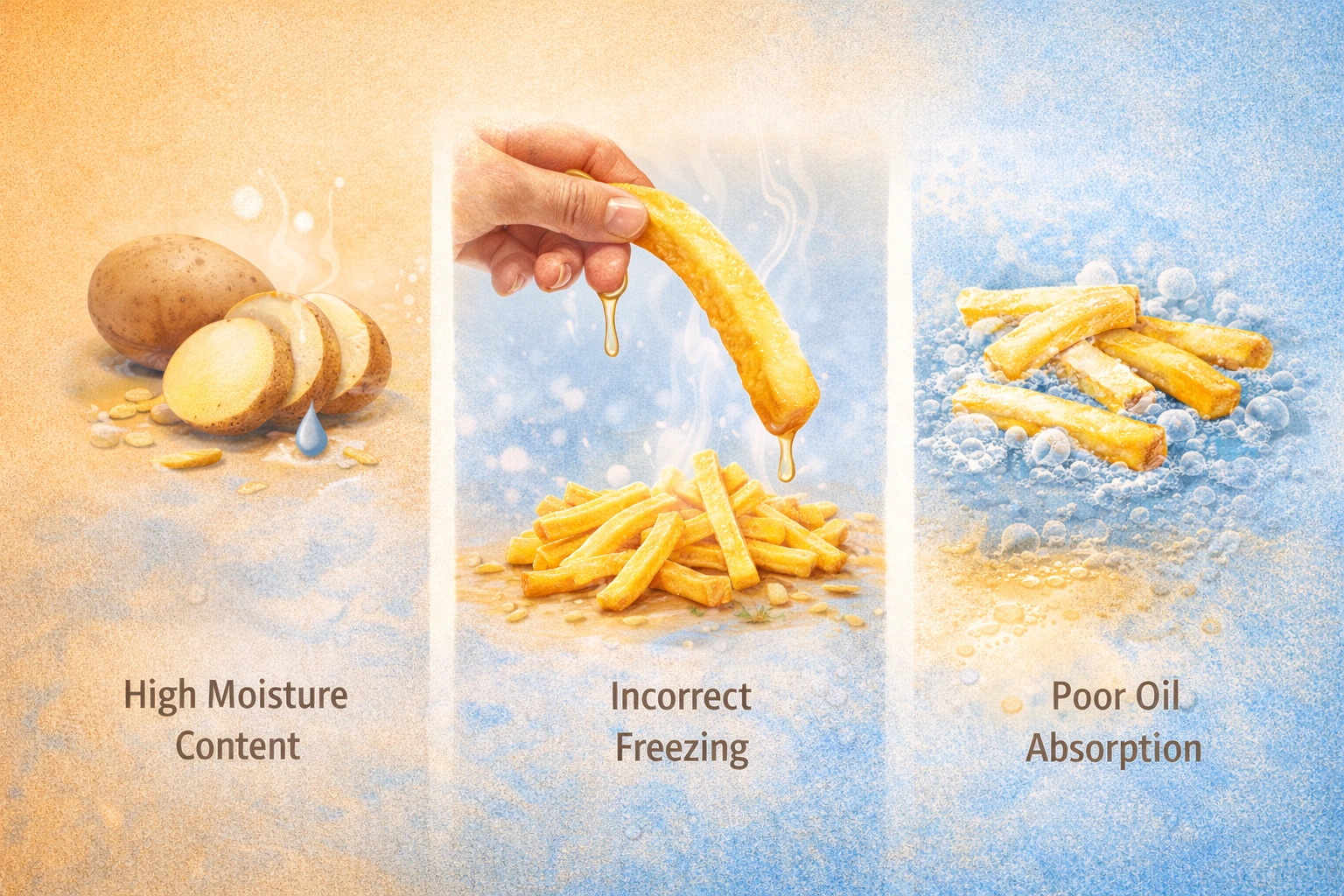
Potatoes naturally contain water. If excess moisture is not controlled during processing or cooking, steam builds up inside the fries. This steam softens the outer layer, making frozen potato fries limp instead of crisp.
Slow freezing allows large ice crystals to form inside the potato structure. When cooked, these crystals melt quickly and release water, causing sogginess. High-quality frozen french fries are usually quick-frozen to lock in texture.
Fries that are not properly prepared absorb too much oil during frying. Instead of forming a crisp shell, the oil penetrates the surface, leading to greasy and soggy fries.
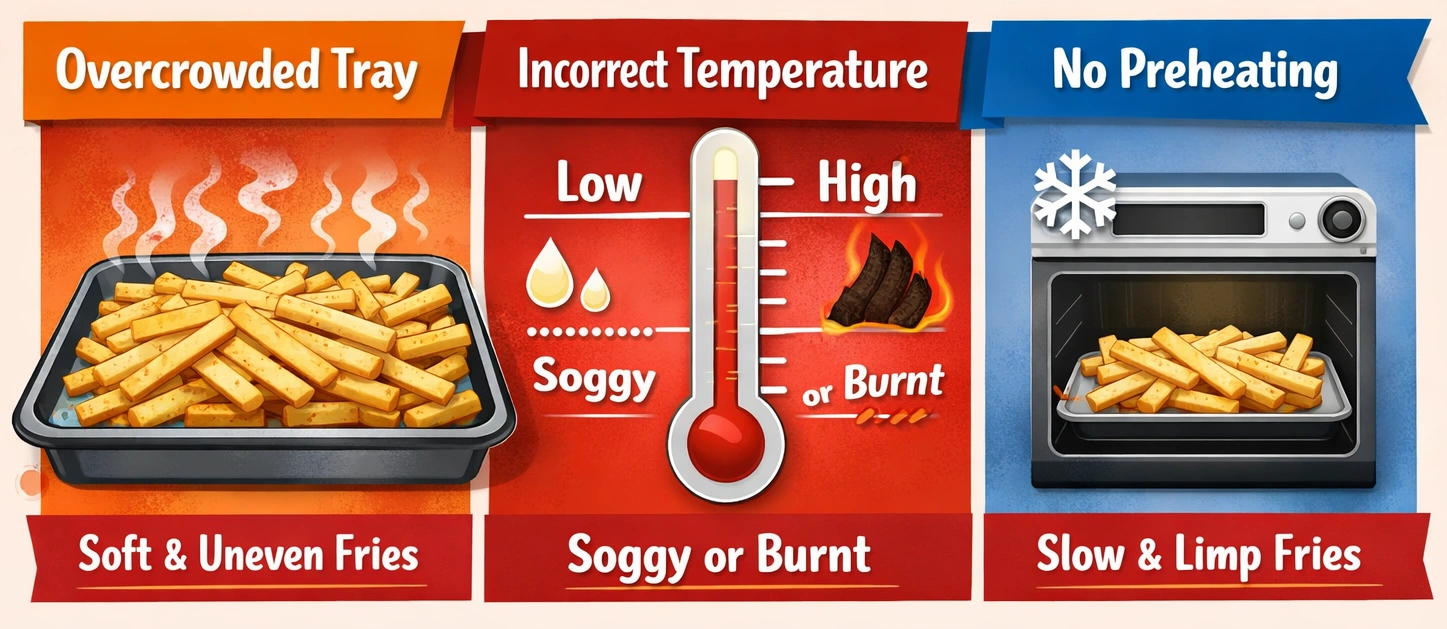
Placing too many fries together traps steam. This prevents proper airflow and even cooking, resulting in soft fries with uneven texture.
Low temperatures allow fries to soak oil instead of crisping. High temperatures without control can cook the outside too fast while leaving moisture inside.
Cooking frozen fries in a cold oven or fryer delays crisp formation. Preheating ensures instant surface cooking, which helps seal moisture inside.
Blanching partially cooks the potatoes and removes surface starch. This step improves color, texture, and crispiness once the fries are cooked.
Some best frozen fries use light coatings that help reduce moisture loss and oil absorption. These coatings are not heavy batters but thin layers designed for better texture.
Modern freezing methods, such as Individual Quick Freezing (IQF), help preserve structure and prevent moisture damage. This is why premium frozen french fries perform better after cooking.
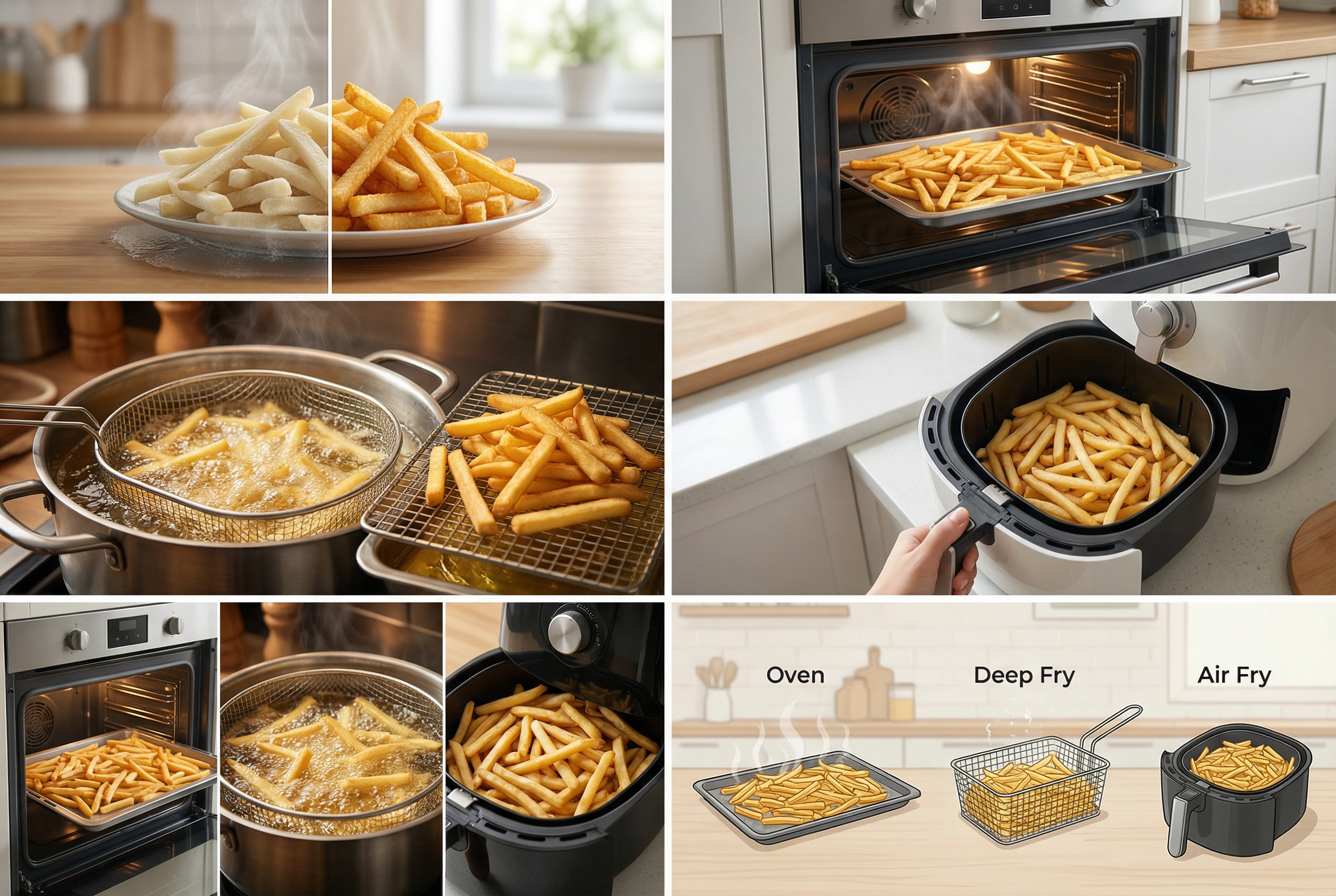
Preheat the oven fully before cooking
Spread fries in a single layer
Flip halfway through cooking
Avoid baking trays with high sides that trap steam
Maintain oil temperature between 175–185°C
Fry in small batches
Allow oil to recover heat between batches
Drain fries immediately after frying
Do not stack fries
Lightly spray oil if required
Shake basket every few minutes
Cook at recommended temperature
Air fryers can deliver excellent results for healthy frozen fries when used correctly.
|
Cooking Method |
Ideal Temperature |
Common Mistake |
Crispiness Result |
|
Oven Baking |
220°C |
Overcrowding tray |
Medium |
|
Deep Frying |
180°C |
Low oil temperature |
High |
|
Air Frying |
200°C |
Layering fries |
Medium to High |
frozen potato products must remain at consistent freezer temperatures. Repeated thawing and refreezing damages texture and increases moisture release during cooking.
Overloading fryers drops oil temperature quickly. This leads to greasy, soft fries. Proper batch sizing ensures consistent crispness.
Clear cooking instructions
Cut style (straight cut, crinkle fries, crinkle cut french fries)
Storage temperature guidelines
Experienced producers follow strict processing and freezing standards. This ensures reliable texture, taste, and food safety for both domestic and export markets.
Chillfill Foods follows industry-grade processing standards to manufacture frozen potato products designed for food service, bulk, and export markets. With controlled freezing, consistent cuts, and reliable supply capabilities, Chillfill Foods focuses on delivering frozen potato fries that perform well across different cooking environments while meeting global quality expectations.
Perfect Frozen Fries Everytime
Soggy fries are usually the result of moisture imbalance, poor cooking technique, or temperature control issues. By choosing quality frozen potato fries, following proper cooking methods, and avoiding common mistakes, you can achieve crisp and satisfying results every time. Whether you prefer french fries straight cut, crinkle fries, or the best frozen french fries for food service, small changes make a big difference.
Low frying temperature and overcrowding cause fries to soak oil instead of crisping.
Air fryers work well for smaller portions and healthy fries.
Oils with high smoke points like sunflower or canola oil are ideal.
Follow package instructions and avoid undercooking or overcrowding.
Yes, thicker cuts hold more moisture and require precise cooking temperatures.