Leading Potato Frozen Food Products Manufacturer
16 April, 2024
Frozen hash browns have evolved from a simple breakfast side into a high-demand product across retail, hospitality, and global foodservice markets.
In this comprehensive guide, you will discover frozen hash browns types, practical frozen hash browns uses, cooking techniques, bulk purchasing strategies, and export considerations. Whether you’re a home cook or sourcing from a wholesale frozen hash browns supplier, this guide will help you make informed decisions.
Frozen hash browns are processed potato products that are shredded, diced, or formed into patties and then flash-frozen to preserve texture and freshness. They fall under the broader category of frozen breakfast potatoes types and uses, widely used in both home kitchens and commercial food operations.
Based on extensive industry work with frozen potato facilities, the production process follows strict quality protocols:
Potato Selection: High-starch varieties like Russet are chosen for optimal crispiness.
Washing & Peeling: Mechanical systems remove debris and skin.
Cutting: Potatoes are shredded, diced, or shaped into patties.
Blanching: Par-cooking stabilizes texture and deactivates enzymes.
IQF Freezing: Individual Quick Freezing locks in structure and flavor.
Flash freezing minimizes ice crystal formation, which helps maintain better texture compared to slow freezing methods.
Typical frozen hash browns nutritional facts include:
Calories: 120–160 per 100g
Carbohydrates: 18–22g
Fat: 3–8g (depending on oil content)
Fiber: 2–3g
Many buyers now prioritize gluten-free frozen hash browns options, which are widely available since potatoes are naturally gluten-free. Clean-label trends are also influencing manufacturers to reduce additives and artificial preservatives.
The industry standard storage temperature is -18°C (0°F). Proper cold chain management directly affects the storage temperature and shelf life of frozen hash browns, which typically ranges from 12 to 24 months.
Avoid temperature fluctuations.
Keep packaging sealed to prevent freezer burn.
Rotate stock using FIFO methodology.
This is especially critical when purchasing bulk frozen hash browns for hotels and catering.
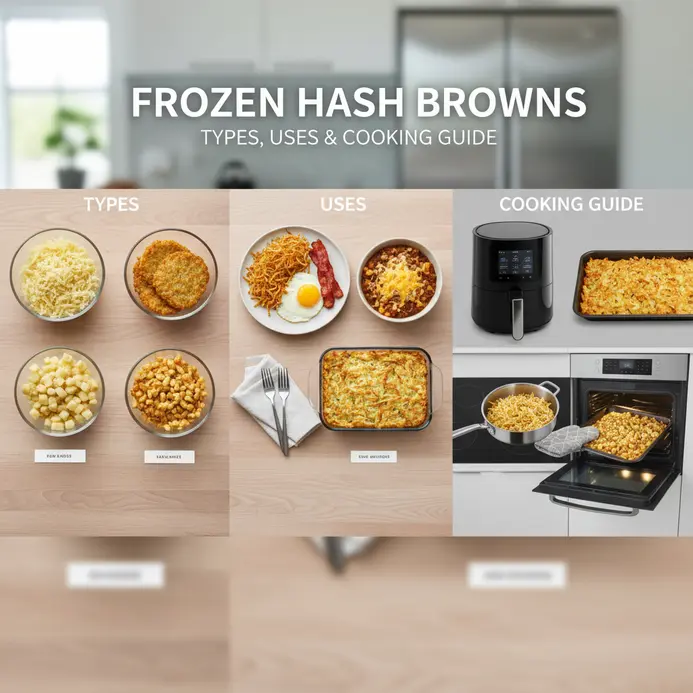
Understanding different frozen hash browns types ensures you select the right format for your menu or retail shelf.
The debate around shredded vs diced frozen hash browns comes down to texture and application.
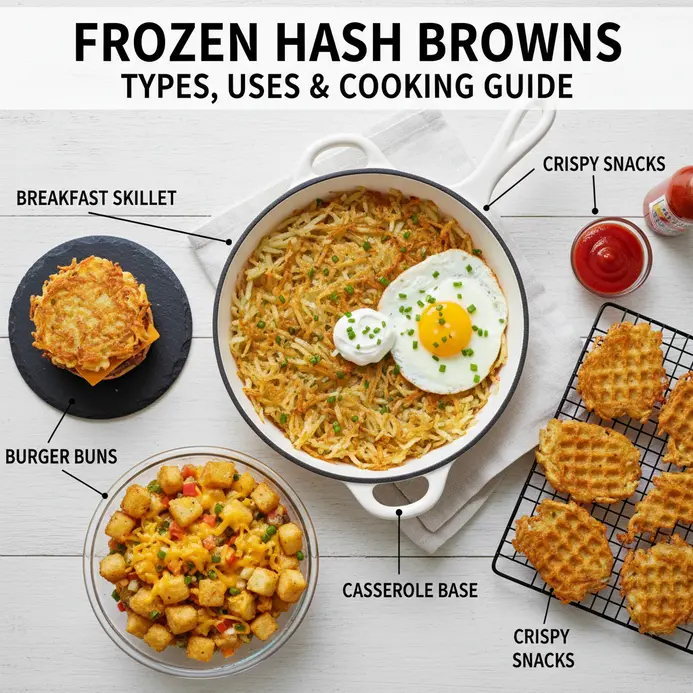
Shredded: Ideal for crispy breakfast skillets and casseroles.
Diced: Best for soups, stews, and breakfast bowls.
Compared to frozen potatoes vs fresh potatoes products, frozen options reduce prep time and ensure consistent sizing, which is critical in restaurant environments.
Specialty formats include:
Frozen potato patties for fast food chains: Uniform size for sandwich builds.
Frozen potato rosti for foodservice: European-style grated potato cakes.
Seasoned frozen hash browns recipe ideas: Pre-spiced blends for convenience.
The best frozen hash browns for home cooking often come in 1–2 lb retail bags, while foodservice buyers prioritize 5–10 lb bulk packs.
When using a frozen hash browns brand comparison guide, evaluate:
Crispness after 10 minutes
Consistency across batches
Performance in oven, air fryer, and griddle
Exploring diverse frozen hash browns uses reveals why they remain a staple in both domestic and commercial kitchens.
Loaded breakfast platters
Gourmet brunch skillets
Hash brown crusted quiches
Plant-based breakfast bowls
They offer cost stability and predictable portion control.
For home cooks, quick breakfast recipes using frozen hash browns include:
10-minute skillet hash with eggs.
Sheet pan breakfast bake.
Air fryer crisp bites.
If you’re wondering how to cook frozen hash browns in oven, follow this proven method:
Preheat to 400°F (200°C).
Spread evenly on a lined sheet pan.
Avoid overcrowding.
Bake 20–25 minutes, flipping halfway.
To learn how to bake frozen hash browns without oil, use parchment paper and convection mode for added crispness.
Air fryer frozen hash browns cooking time typically ranges between 8–12 minutes at 375–400°F.
Shake basket halfway through.
Cook in small batches.
Do not thaw beforehand.
Restaurants maintain oil temperatures at 350–375°F for consistent browning. Temperature control prevents soggy interiors and uneven crust formation.
When selecting a commercial frozen hash browns supplier for catering, verify:
HACCP, FDA, BRC certifications
Cold chain reliability
Consistent grading standards
A reputable wholesale frozen hash browns supplier worldwide ensures year-round availability.
Reliable distribution reduces spoilage risk and protects margins.
A trusted frozen hash browns exporter to worldwide must comply with labeling laws and temperature controls. Proper documentation is essential when planning to export frozen hash browns.
For sourcing support and international supply capabilities, visit ChillFill Foods.
Modern ready-to-cook frozen hash browns packaging design focuses on convenience and transparency.
Resealable zippers
Clear nutritional labeling
Foodservice bulk cartons
Sustainable packaging solutions for frozen foods include recyclable plastics and reduced material weight. Buyers increasingly prefer eco-conscious suppliers.
This blocks airflow and prevents crisp texture development.
Temperature swings cause ice crystals and texture degradation.
Using diced instead of shredded can drastically alter mouthfeel and presentation.
Get Crispy Frozen Hash Browns for Every Meal
Required product format
Certifications and compliance
Gluten-free verification
Packaging needs
Frozen hash browns price per kg
Nationwide distribution capability
In conclusion, frozen hash browns remain one of the most versatile and profitable frozen potato products in both retail and foodservice markets. By understanding frozen hash browns types, optimizing frozen hash browns uses, and applying proper cooking and sourcing strategies, buyers can maximize quality, efficiency, and profitability.
They are partially cooked (blanched) but require full cooking before consumption.
Use high heat (400°F), avoid overcrowding, and flip halfway through baking.
Shredded creates a crispy crust, while diced delivers chunkier texture for soups and bowls.