Leading Potato Frozen Food Products Manufacturer
16 April, 2024
Frozen potato snacks are among the easiest comfort foods to cook at home. From golden french fries to creamy potato cheese balls, crispy hash browns, and even hearty frozen potato skins, they’re loved for their taste and convenience. Yet one common problem is that these treats sometimes turn out greasy or soggy. Learning how to cut down on oil absorption can help you serve crispier, healthier snacks every time.
Understanding the science helps you fix it. When frozen potato snacks hit hot oil, the moisture inside turns to steam. If the surface isn’t sealed quickly, that steam creates channels where oil can seep in. Moisture content, oil temperature, cut size, and coating all influence this process. For example, thin crinkle fries or delicate frozen potato cheese balls have a greater surface area compared to thick wedges or potato skins, which often results in more oil uptake. Even the type of oil matters old or low-smoke-point oils break down faster and coat food more readily.
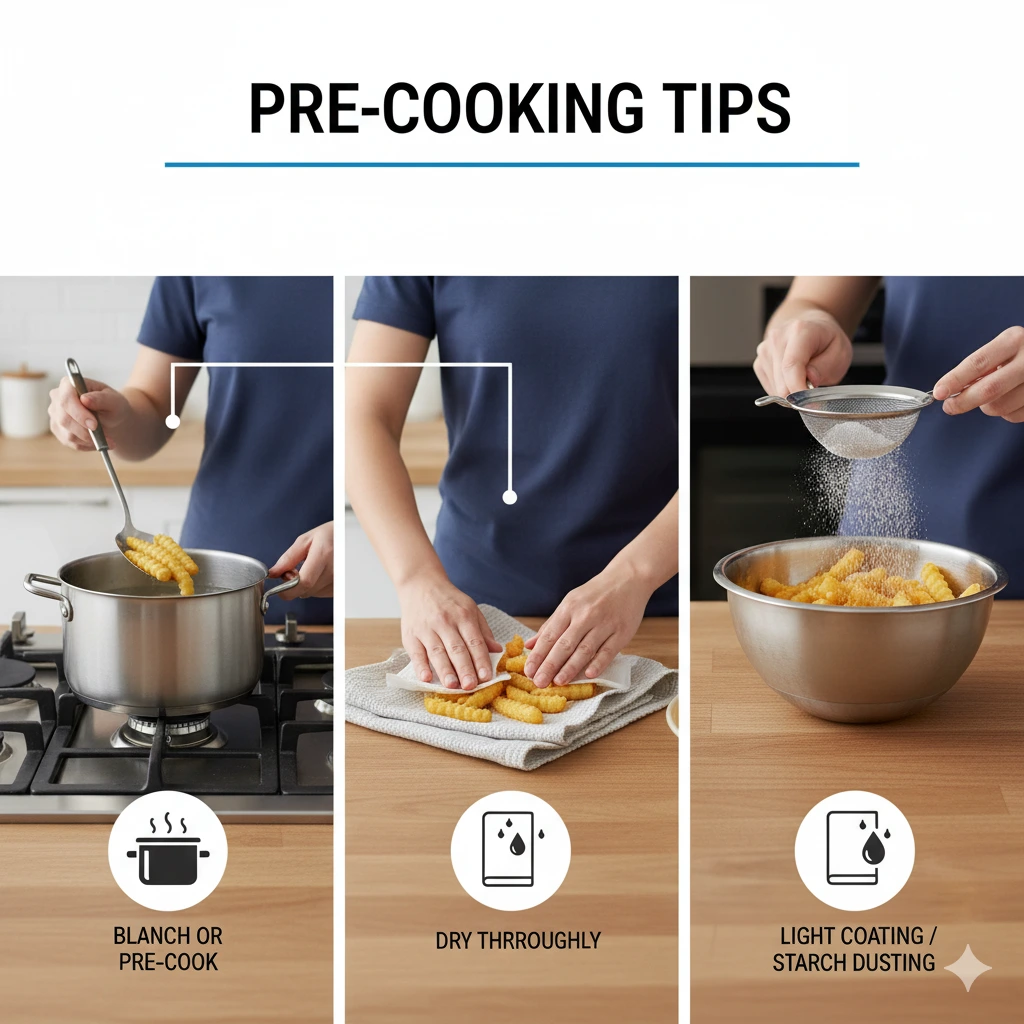
Good preparation cuts oil absorption before you even start cooking:
Blanch or pre-cook if possible: Brief boiling or steaming helps gelatinise starches and drive off excess water inside the potato. Many frozen hash browns, hash brown patties, and even some frozen potato skins are already blanched, but if yours aren’t, doing this step yourself creates a barrier that keeps oil out during frying.
Dry thoroughly: After thawing or unpacking, spread snacks on a tray lined with kitchen towels. Pat them dry to remove surface frost or condensation. This step is crucial because water droplets cool the oil, lengthen cooking time, and give oil a chance to seep in.
Light coating or starch dusting: A thin layer of flour, cornstarch, or rice flour forms a micro-shield that locks moisture inside and slows oil absorption. This is especially effective with ridged items like crinkle french fries and battered snacks such as frozen potato cheese balls.
Even well-prepared snacks can soak oil if cooked incorrectly. Use these techniques:
Maintain the right oil temperature : Preheat oil to 175–190 °C (350–375 °F). At this range, the surface of fries or wedges crisps within seconds, sealing pores and reducing oil penetration. An inexpensive kitchen thermometer can help you monitor heat accurately.
Fry in two stages for thicker items: Cook at a lower temperature (~160 °C) first to let the inside cook gently, then raise the heat to crisp the outer layer. This approach works especially well for chunky frozen potato wedges or filled potato skins that need more time inside.
Avoid overcrowding: Adding too many pieces at once causes a sudden temperature drop. Oil that’s too cool will bubble less and soak more. Fry in small batches, giving each snack space to cook evenly.
Use fresh, high-quality oil: Oils with high smoke points (peanut, sunflower, refined canola) stay stable at frying temperatures and form a lighter crust. Old oil, by contrast, breaks down and clings to food, leaving a greasy mouthfeel.
Deep-frying isn’t the only way to achieve crispness:
Oven bake: Spread frozen fries, hash brown patties or baked french fries frozen on a preheated tray, lightly mist with oil, and bake at 200–220 °C (400–425 °F). High initial heat plus enough space between pieces lets hot air circulate, creating a crunchy exterior without deep oil immersion.
Air fry: Air fryers circulate hot air at high speed, giving you a fried-like texture using just a spoon or spray of oil. Frozen potato cheese balls, crinkle fries, and even wedges become golden in minutes while cutting oil by up to 80 %.
Convection ovens: If you don’t own an air fryer, a fan-assisted oven achieves a similar effect. The moving hot air helps dry surfaces faster, reducing residual oil and improving texture.
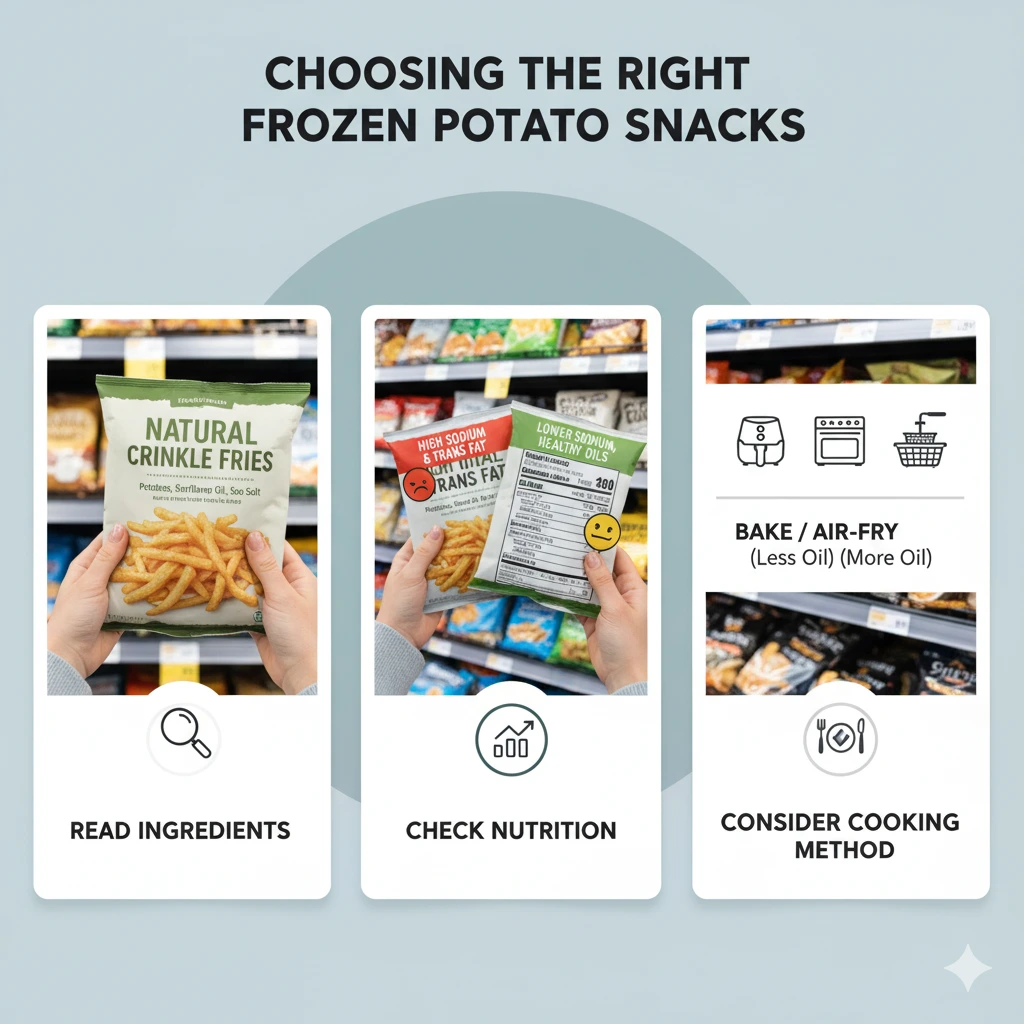
What you buy also affects how much oil ends up in the finished product:
Check for “pre-blanched” or “par-fried” labels: These indicate the manufacturer has already removed excess moisture and partially sealed the surface, which helps during home cooking.
Read coating details: Some products use light batters designed for crispiness; others have heavy coatings that can trap oil. Compare packages of frozen fries, hash brown patties, potato skins, and frozen potato cheese balls to see which style fits your health goals.
Size and shape considerations:Crinkle french fries have more ridges and therefore more exposed surface for oil contact. Thick wedges or skins cook slower inside but can be crisped beautifully with two-stage frying or baking. Even baked french fries frozen benefit from enough space on the tray and a hot start for crunch.
Even after cooking you can take steps to cut excess grease:
Drain properly: Place cooked snacks on a rack or layered paper towels to wick away oil. A cooling rack over a tray lets oil drip off without the food sitting in it.
Serve promptly: The longer hot snacks sit, the more steam condenses back into moisture, softening the crust and making oil feel heavier. Serve soon after cooking for best crunch.
Reheat smartly: Use an oven or air fryer rather than a microwave. Dry heat revives crispness without adding extra oil, whereas microwaves can make snacks limp and greasy.
Make sure fries are dry before they hit the oil, keep your fryer at 175–190 °C, and avoid overcrowding. These simple steps ensure a sealed crust and less oil absorption.
Greasy hash browns usually mean the oil was too cool, the patties weren’t dried, or they sat in oil too long. Try blotting them before cooking and using a hotter initial temperature.
Baking or air frying uses far less oil and still gives a satisfying crunch if you preheat properly and give each piece space. Frying can yield a classic texture but nearly always absorbs more oil.
Reducing oil absorption in frozen potato snacks isn’t complicated just a matter of the right prep, cooking method, and product choice. Blanch or dry your snacks before cooking, keep oil temperatures steady, and consider healthier alternatives like oven baking or air frying. Whether you’re making crinkle fries, hash brown patties, frozen potato cheese balls, or hearty potato wedges, these tips will help you achieve that golden, crispy finish with less grease and more flavour.