
Leading Potato Frozen Food Products Manufacturer
16 April, 2024
Air frying has changed the way people enjoy fries today. With less oil, faster cooking, and cleaner kitchens, air fryers are now common in homes, cafés, cloud kitchens, and restaurants. As air-fried food becomes more popular for healthier eating, one common question keeps returning: should you choose thin fries or thick fries for air frying?
The truth is, fry thickness plays a major role in how crispy, soft, or evenly cooked your fries turn out. Thin fries cook quickly and turn crispy fast, while thick fries take longer and stay soft inside. In this guide, we break down the real-world performance of thin fries vs thick fries in air frying, based on texture, taste, health, and practical kitchen usage.
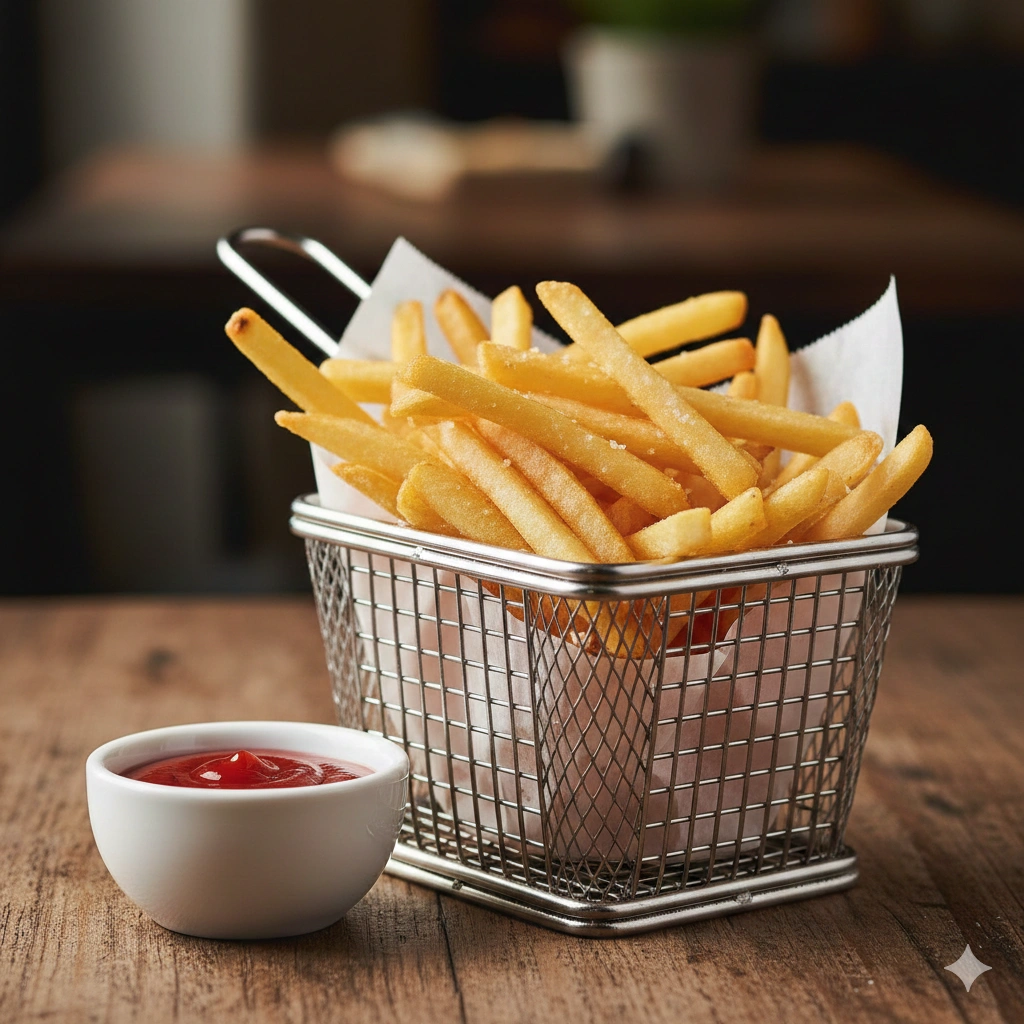
Thin fries are slim-cut potato strips made specifically for fast cooking and high crispiness. They are commonly known by names such as skinny french fries, thin potato fries, thin crispy fries, and thin cut french fries. These fries are usually sliced between 5–7 mm in thickness, making them extremely responsive to heat in an air fryer.
Because of their thin structure, heat reaches the center very quickly. This causes surface moisture to evaporate fast, forming a crisp outer shell in minutes. That is why thin fries dominate fast-food menus they cook quickly, hold crunch for longer (if served fresh), and appeal strongly to people who enjoy sharp texture and light bites. However, thin fries also lose moisture faster than thick fries, meaning they must be cooked with precision to avoid overdrying.
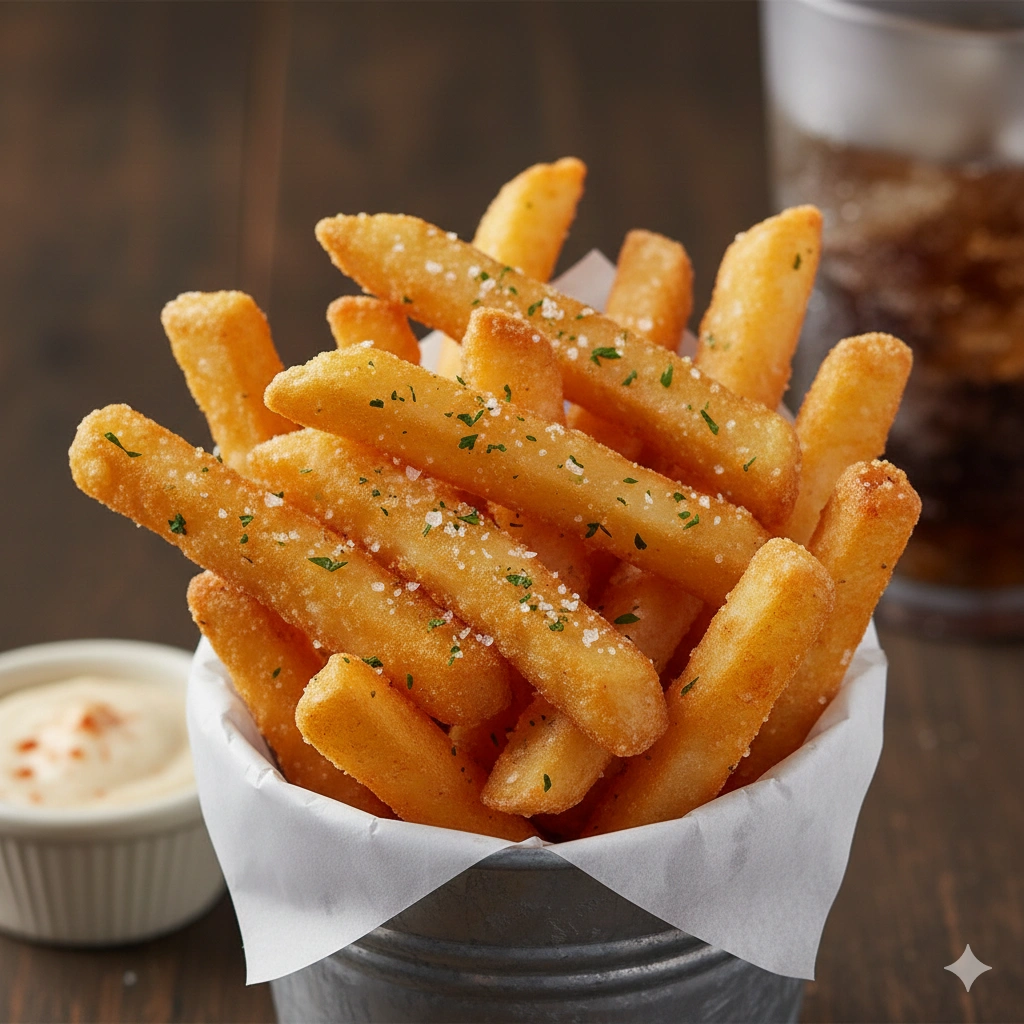
Thick fries are heavier cuts that prioritize softness and fullness over speed. These include thick cut french fries, thick cut fries, thick cut potato fries, and thick french fries. These fries generally measure between 10–14 mm in thickness.
Unlike thin fries, thick fries have more potato mass inside. This allows them to retain internal moisture while the outer surface slowly develops a crust. Thick fries are popular in comfort meals, loaded fries, and gourmet plating because they provide a satisfying potato bite. They take longer to cook in air fryers, but when done right, they deliver a beautiful contrast of crispy outside and fluffy inside.
Air frying depends entirely on rapid hot air circulation. There is no deep oil to distribute heat evenly like traditional frying. Because of this, thickness becomes the most critical technical factor in air-fryer performance.
Lose moisture quickly
Brown fast
Form crust early
Trap moisture inside
Brown slowly
Need airflow on all sides
If thickness is ignored, even the best air fryer cannot deliver consistent results. Thin fries may burn, while thick fries may remain pale and soft. That is why fry cut directly determines crispiness, softness, cooking speed, and flavor development.
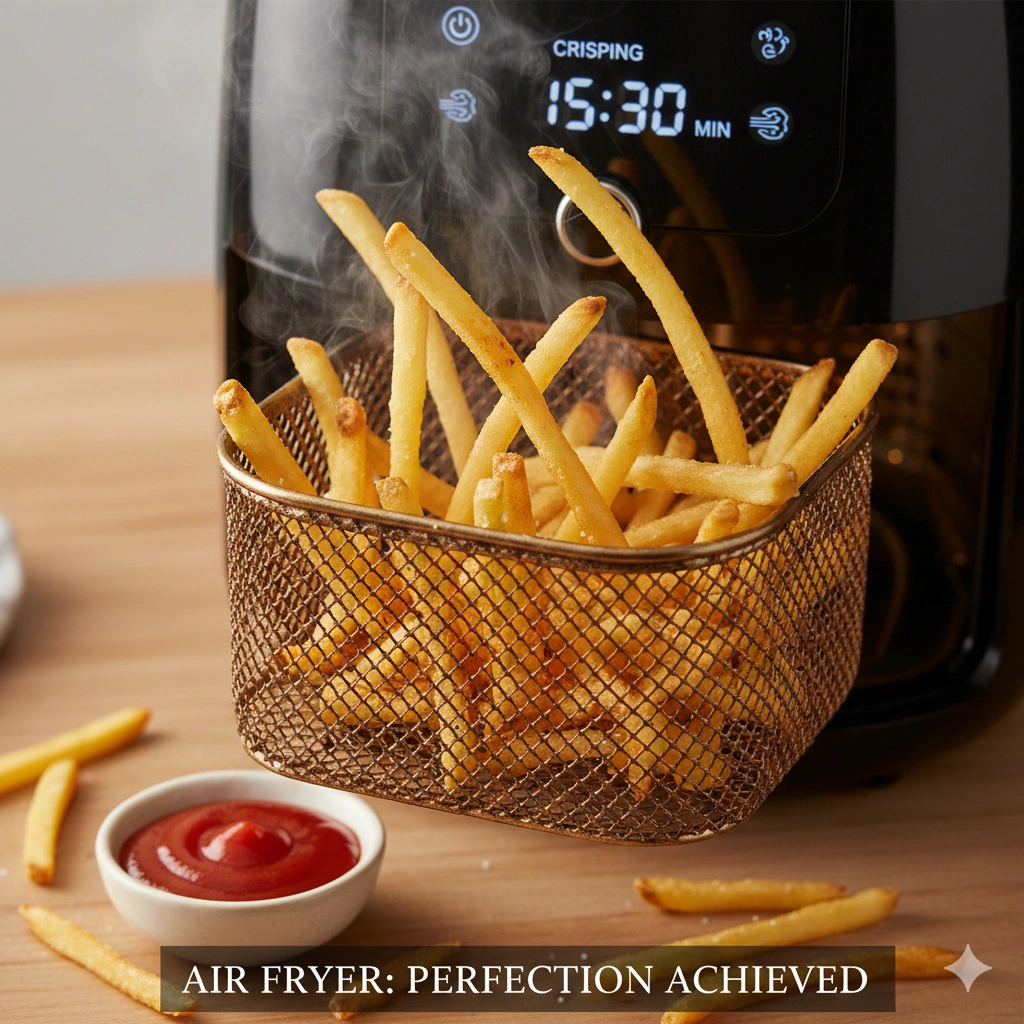
Thin fries thrive in air frying because they respond immediately to heat:
Average cooking time: 8–12 minutes
Oil use: minimal oil spray
Texture: very crispy, light, and crunchy
Tips: frequent shaking during cooking helps even browning, and careful timing prevents overdrying.
Thin fries like skinny french fries develop a crunchy shell quickly, making them ideal for snacking and fast service where crispness is a priority.
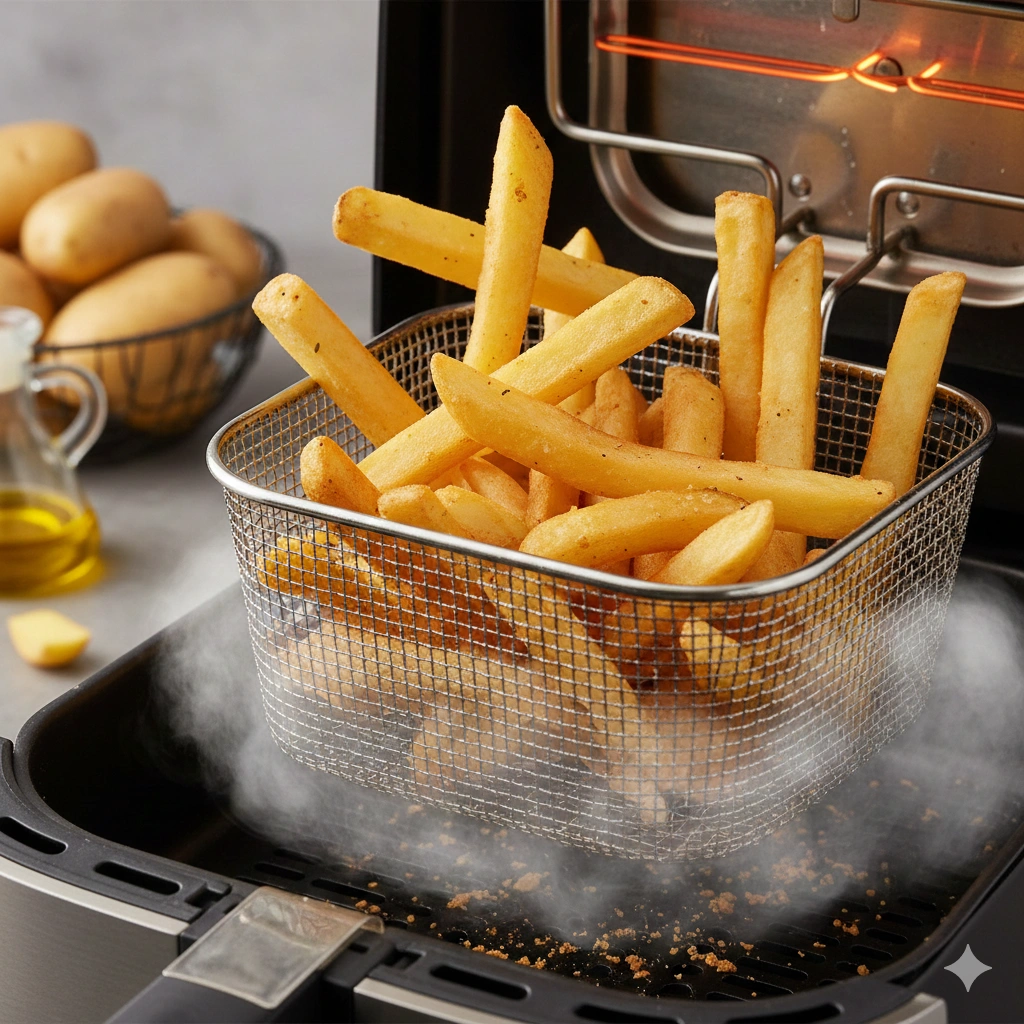
Thick fries behave very differently because of their dense potato core.
Average cooking time: 15–20 minutes
Oil use: moderate
Internal texture: creamy and fluffy
Surface crisping: slower
Because heat takes longer to reach the center of thick cut potato fries, they require flipping, spacing, and slightly higher cooking control. If overcrowded, steam builds up between the fries, preventing surface browning.
When handled correctly, thick fries reward patience with a rich bite crispy edges paired with a pillow-soft center that delivers deep potato flavor.
When it comes to crispiness, thin fries dominate clearly.
Thin crispy fries develop crunch almost instantly.
Thick fries need extended cooking to match even moderate crisp.
Thin fries are ideal for snack plates, quick sides, and fast service where immediate crunch is expected. Thick fries shine more in texture contrast rather than sharp crispiness. If crunch is your absolute priority, thin fries will always feel more satisfying in air frying.
Sharp crunchiness right from the first bite
Lighter, airier mouthfeel
Strong seasoning impact due to large surface area
Creamy, fluffy interior that feels hearty
Deeper potato flavor
More filling and substantial bite
Your choice depends on whether you prefer a light snack or a more comforting, filling side
Air frying already reduces oil usage dramatically, but cut size still influences calories.
Need minimal oil spray
Lower calories per portion
Smaller carbohydrate load
Better for frequent snacking
Hold more starch
Absorb slightly more oil
More filling per portion
For calorie-conscious consumers, thin cut french fries generally fit better into balanced air-fried diets.
Each fry cut has a clearly defined role.
Kids’ meals
Evening snack cravings
Cafés and quick-service outlets
Light platters
Loaded cheese fries
Gravy-based fries
Gourmet plates
Full meal accompaniments
Using thin fries for heavy toppings often leads to limp texture, while thick fries carry sauces and cheese effortlessly.
Preheat air fryer to 200°C
Use a very light mist of oil
Shake basket frequently every 3 minutes
Remove fries as soon as golden to avoid dryness
Preheat air fryer to 190°C
Apply moderate oil spray to encourage crisping
Flip fries halfway through cooking
Increase temperature slightly at the end for extra crisp
Avoid overcrowding the basket to ensure proper airflow, essential for both thin and thick fries.
|
Feature |
Thin Fries |
Thick Fries |
|
Cooking Speed |
Very Fast |
Slow |
|
Crispiness |
Very High |
Medium |
|
Inside Texture |
Light |
Fluffy |
|
Oil Usage |
Low |
Medium |
|
Best Use |
Snacks |
Loaded meals |
|
Satiety |
Low |
High |
In professional kitchens, the choice depends on service style.
Fast food & cafés: Thin fries for speed and turnover
Premium dining & pubs: Thick fries for plating and value
Many kitchens stock both to balance speed and presentation. Thin fries dominate output volume, while thick fries enhance perceived dish value.
Frozen fry quality has a massive impact on air-fryer results. Poor cutting, excess moisture, and weak pre-treatment lead to uneven cooking.
At ChillFill Foods, fries are engineered for:
Uniform cutting for even heat distribution
Balanced moisture retention
Optimized surface texture for crisping
Strong seasoning adhesion
Reliable results across thin & thick fries
Whether it’s thin crispy fries for quick snacks or thick cut potato fries for loaded meals, ChillFill Foods ensures predictable results for home kitchens and professional food businesses.
Choose Perfect Air Fryer Fries
So, when it comes to thick vs thin fries for air frying, there is no single winner only the right choice based on how you plan to serve and enjoy your fries. If your goal is fast cooking, maximum crunch, and lighter snacking, thin fries are clearly the better option. They crisp up quickly, require very little oil, and deliver the sharp bite most people associate with classic fast-food fries. On the other hand, if you prefer a soft, fluffy interior, heavy toppings, and a more filling serving, thick fries are the smarter choice. They take longer to cook, but they reward patience with deep potato flavor and strong topping support. Air frying enhances both styles in a healthier way, making your final choice less about health and more about texture, serving style, and personal preference.
Yes, if you prioritize speed and crispiness. Thin fries cook faster and deliver superior crunch with less oil, making them ideal for quick, crispy thin fries.
Thick fries have more potato inside, so heat penetrates slowly. This keeps the center fluffy but delays browning, gives thick cut fries extra time and flips for best results.
Just a light spray! Too much oil can make thin potato fries soggy; a minimal mist is all skinny french fries need for perfect golden crispiness.
Thick cut french fries every time. They stay firm under cheese, gravy, or toppings, while thin crispy fries can turn limp quickly.
Slightly, yes thin fries use less oil, have fewer calories per portion, and encourage lighter snacking. Both beat deep frying, but thin cut french fries fit easier into calorie-conscious meals.