Leading Potato Frozen Food Products Manufacturer
16 April, 2024
The global food industry is witnessing strong growth in vegetarian convenience foods as consumers look for quick, nutritious, and easy-to-prepare meal solutions. Busy lifestyles, urbanization, and rising health awareness are driving demand for ready-to-cook and frozen food products across retail and food service sectors.
In this evolving market, Paneer vs Frozen Veggie Patty has emerged as an important comparison for manufacturers and distributors. Both products cater to vegetarian consumers but differ in shelf life, export potential, and scalability.
Changing consumer preferences, growing plant-based trends, and expanding international trade are shaping market growth. Understanding Paneer vs Frozen Veggie Patty demand patterns helps businesses align production and distribution strategies with emerging global opportunities.
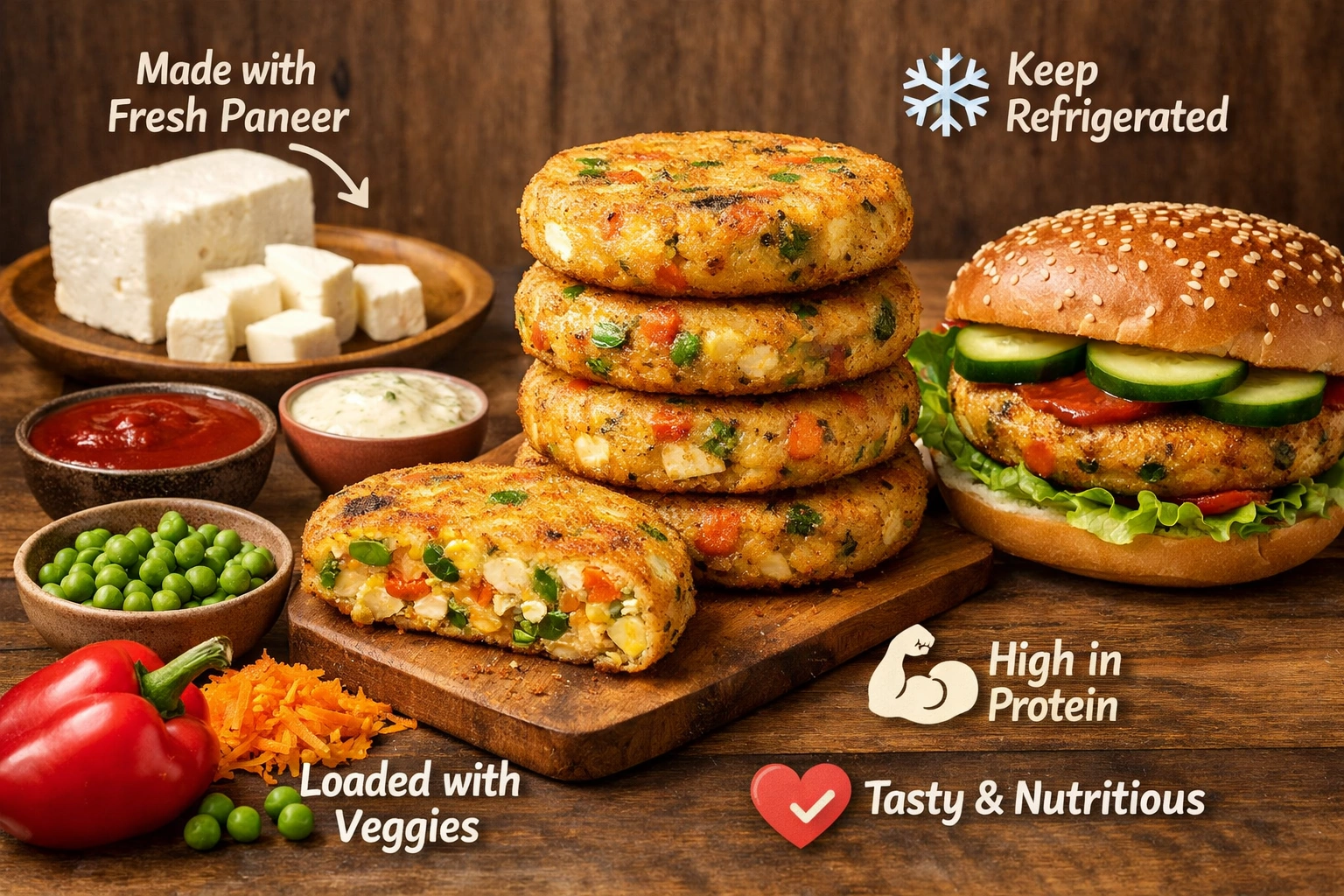
A Paneer Veggie Patty is a vegetarian snack made using fresh paneer combined with vegetables, herbs, and spices. It is often coated lightly and shaped into patties for shallow frying, baking, or grilling.
Paneer, being a dairy-based protein, gives the patty a rich texture and higher protein profile. It is widely preferred in Indian households, cafés, and quick-service restaurants due to its familiar taste.
The demand for Paneer Veggie Patty products is strong in India and South Asian markets. Consumers associate paneer with freshness and nutrition, making it suitable for burgers, wraps, and snacks.
However, because paneer is a dairy product, it requires refrigeration and has a shorter shelf life compared to fully frozen alternatives.
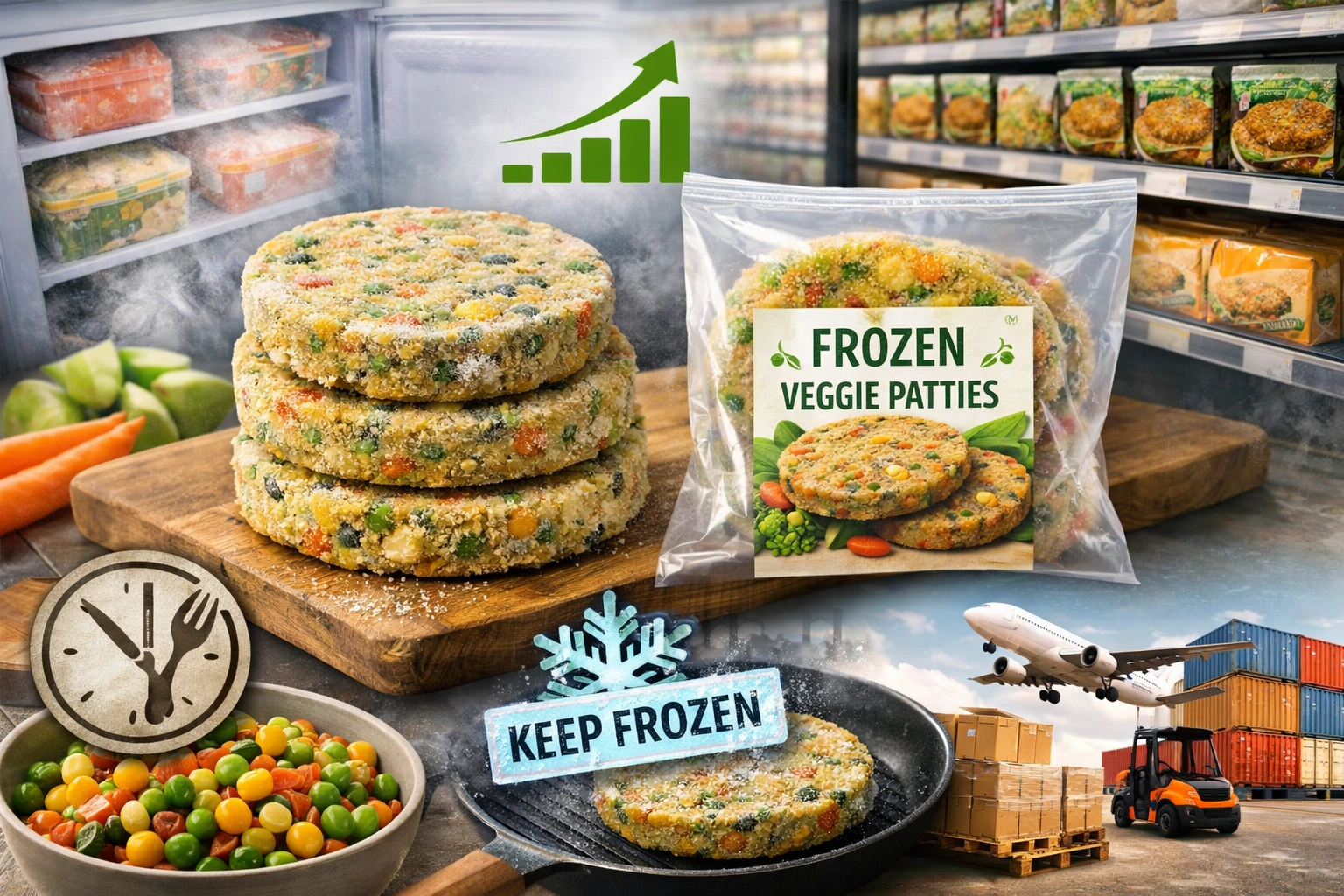
A Frozen Veggie Patty is a plant-based product made from mixed vegetables, legumes, binders, and seasonings. After preparation, the patties undergo blast freezing to extend shelf life and preserve taste.
The freezing process ensures minimal nutrient loss while maintaining texture and safety. These patties are designed for long storage and are ideal for retail supermarkets and food service businesses.
The growth of Frozen vegetarian patty demand is largely driven by urban lifestyles. Consumers prefer quick meal solutions that require minimal preparation time.
Because of extended shelf stability, Frozen Veggie Patty products are more suitable for export markets and bulk distribution.
|
Feature |
Paneer Veggie Patty |
Frozen Veggie Patty |
|
Protein Content |
Higher due to dairy |
Moderate plant-based protein |
|
Fat Level |
Moderate to high |
Lower to moderate |
|
Shelf Life |
Short (requires refrigeration) |
Long (deep frozen storage) |
|
Additives |
Minimal |
May include stabilizers |
|
Calories |
Slightly higher |
Moderate |
Paneer-based patties typically offer higher protein because of dairy content. However, frozen vegetable patties often have lower fat and are preferred by calorie-conscious consumers.
From a health positioning perspective, both can be marketed effectively depending on target audience needs.
Supermarkets play a major role in driving Frozen Veggie Patty sales. With growing shelf space for frozen vegetarian snacks and ready-to-cook foods, consumers are increasingly adding these patties to their regular grocery baskets. Urban shoppers prefer convenient, longer shelf-life products that are easy to prepare. Attractive packaging, flavor variety, and promotional pricing further strengthen frozen veggie patty market demand in organized retail.
In the B2B segment, Paneer Veggie Patty demand remains strong in hotels, corporate cafeterias, and catering services. Paneer is widely accepted in Indian cuisine, making it a safe and versatile choice for bulk meal preparation. Institutional buyers value its familiar taste and ability to fit into multiple menu formats, from burgers to buffet snacks.
Quick Service Restaurants use both Frozen Veggie Patty and paneer-based patties to serve vegetarian consumers efficiently. Frozen patties offer cost control and consistency, while paneer patties appeal to customers seeking richer, traditional flavors. QSR growth continues to influence Paneer vs frozen veggie patty trends across urban markets.
Retail chains are expanding private label frozen products to meet price-sensitive demand. Frozen veggie patties are increasingly available under store brands, offering competitive pricing. Paneer-based private label products are also emerging, especially in ready-to-cook formats, reflecting steady growth in the vegetarian convenience food market.
Online grocery platforms have boosted accessibility for frozen products. Consumers now regularly search for frozen vegetarian snacks and ready-to-cook patties through e-commerce apps. Reliable cold delivery systems have improved trust, contributing to rising Frozen vegetarian patty demand and steady online sales growth.
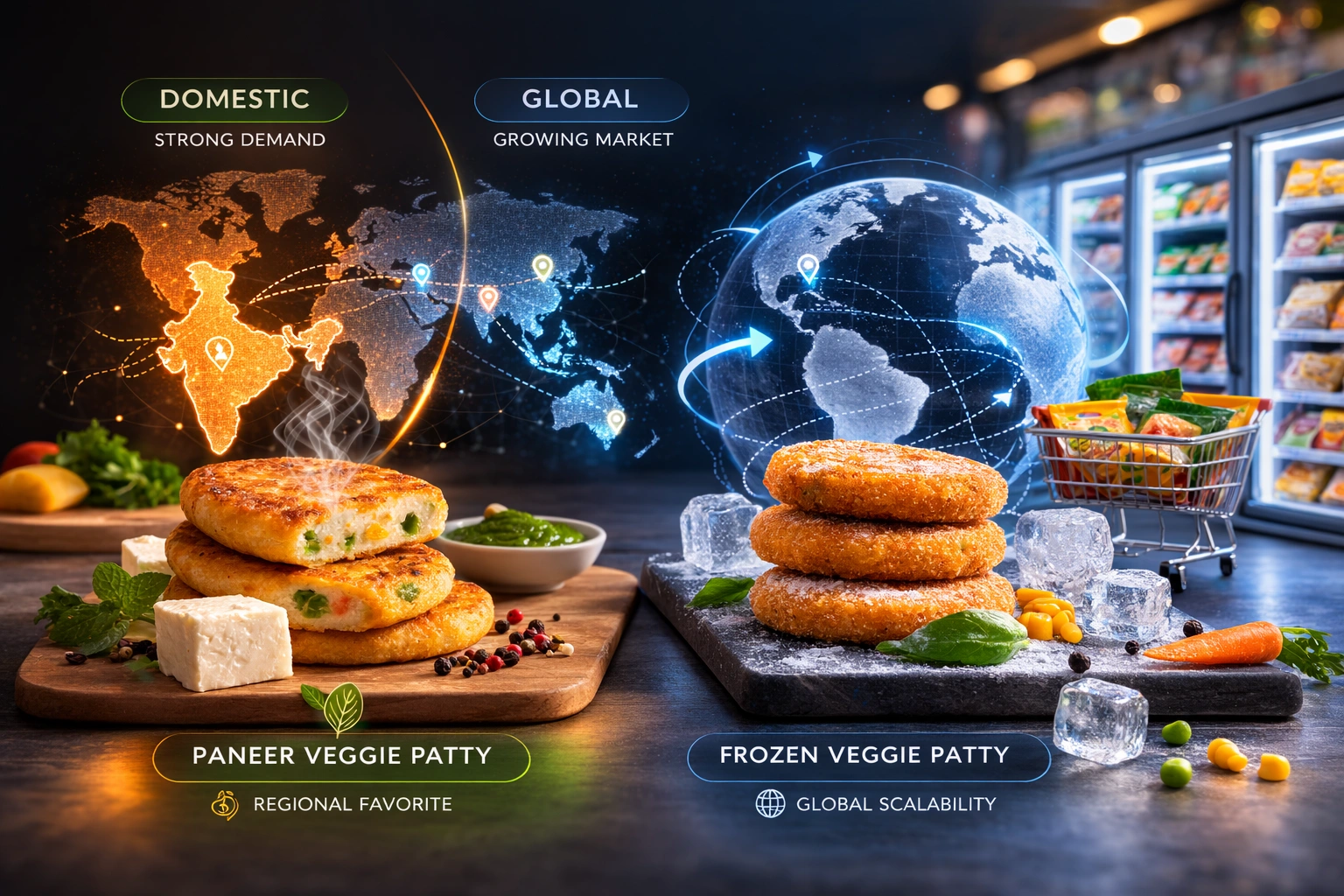
Paneer Veggie Patty demand remains strong in India and other South Asian markets where paneer is a staple protein source. Its cultural familiarity plays a significant role in steady consumption. Consumers are already comfortable with paneer-based snacks, making product acceptance easier.
Cafés, quick-service restaurants, and catering businesses increasingly include paneer patties in burgers, wraps, and snack menus. The premium perception of paneer also supports pricing flexibility in domestic markets. However, distribution is often dependent on reliable refrigeration and shorter supply chains due to dairy content.
While regional growth is stable, export expansion can be limited by cold-chain requirements and dairy compliance regulations in international markets.
Frozen Veggie Patty market demand shows stronger global scalability. These products are widely accepted in the Middle East, Europe, and North America, where frozen convenience foods dominate retail shelves.
Supermarkets and hypermarkets continue to expand their frozen sections, supporting consistent retail growth. Longer shelf life reduces wastage and improves inventory management for distributors.
When comparing Frozen veggie patty market demand vs Paneer Veggie Patty demand, frozen variants clearly offer broader international reach. Paneer patties maintain strong regional demand, while frozen veggie patties benefit from export compatibility, modern retail expansion, and global convenience trends.
Raw material pricing plays a major role in the Paneer vs Frozen Veggie Patty comparison. Paneer production depends heavily on milk prices, which fluctuate due to seasonal supply, feed costs, and dairy market trends. This can directly impact manufacturing costs and pricing stability.
In contrast, Frozen Veggie Patty production relies on vegetables, grains, and plant-based binders. While vegetable prices also fluctuate seasonally, diversified sourcing and bulk procurement often help stabilize overall input costs. As a result, frozen vegetarian patty demand can sometimes be less sensitive to dairy price volatility.
Both paneer-based patties and Frozen Veggie Patty products require controlled cold storage. However, paneer is more temperature-sensitive and has a relatively shorter shelf life compared to vegetable-based frozen products. Strict refrigeration is essential at every stage, from manufacturing to retail display.
Frozen veggie patties typically have longer shelf stability when stored at consistent sub-zero temperatures. This extended shelf life reduces the risk of spoilage and inventory losses, making supply chain management slightly more flexible.
Transportation efficiency is closely linked to cold chain infrastructure. Paneer products demand uninterrupted refrigeration, increasing dependency on reliable cold logistics. Any temperature deviation can affect texture and quality.
Frozen veggie patties are comparatively more resilient during transit if maintained at recommended freezing conditions. Their longer shelf life supports wider geographic distribution, including Tier 2 and Tier 3 cities. Improved refrigerated transport systems have strengthened overall efficiency in the vegetarian convenience food market.
Distributor margins depend on production cost, shelf life, and turnover rate. Paneer-based products may carry slightly higher price points due to dairy input costs, but they also face tighter inventory management due to shorter shelf life.
Frozen Veggie Patty products often allow better stock rotation and reduced wastage, which can improve operational margins. Their growing presence in retail, QSR, and online channels supports consistent volume movement.
Overall, while both categories offer profitable opportunities, frozen veggie patty market demand may provide more stable margin control due to longer shelf life and broader distribution scalability.
Paneer-based patties are widely recognized for their higher protein content due to dairy ingredients. This makes them appealing to consumers seeking protein-rich vegetarian options. However, they may also contain more calories and fat. Frozen veggie patties generally offer moderate protein with comparatively lower calorie density, attracting health-conscious buyers focused on balanced nutrition.
Modern consumers increasingly prefer clean-label products. Transparent ingredient lists, minimal processing, and natural components influence buying decisions. Both paneer and frozen vegetable patties are being reformulated to meet this demand.
There is a common belief that frozen products contain excessive preservatives. In reality, advanced freezing techniques help maintain freshness without heavy chemical additives. Stabilizers may be used for texture, but they are regulated and safe within permitted limits.
Consumer awareness is steadily rising. Shoppers now read nutrition labels carefully and compare ingredients before purchase. Rather than assuming fresh is always healthier, many buyers understand that properly frozen products can retain nutrients effectively.
ChillFill Foods stands out in the competitive Paneer vs Frozen Veggie Patty market by combining quality, innovation, and reliable supply chain management. The brand follows strict hygiene and food safety standards to ensure consistent taste, texture, and shelf stability across its frozen vegetarian snacks and ready-to-cook foods.
With strong cold chain infrastructure and efficient logistics, ChillFill Foods supports smooth distribution across retail, QSR, and institutional channels. Its diverse product portfolio, including both paneer-based and vegetable-based patties, allows partners to cater to evolving Paneer Veggie Patty demand and Frozen vegetarian patty demand.
Focused on innovation and scalable B2B solutions, ChillFill Foods offers export-ready packaging and bulk production capabilities, helping distributors grow confidently in the expanding frozen veggie patty market demand landscape.
The comparison of Paneer vs Frozen Veggie Patty highlights two strong yet distinct segments in the vegetarian convenience food market.
Paneer patties maintain cultural relevance and protein appeal in domestic markets. Frozen veggie patties offer scalability, longer shelf life, and export-friendly logistics.
Understanding Paneer vs frozen veggie patty trends enables frozen food manufacturers and exporters to align production strategies with evolving consumer demand. As global markets continue to expand, frozen vegetarian products are positioned for stronger international growth, while paneer variants remain a reliable regional favorite.
Both categories present promising opportunities when supported by quality manufacturing, compliance standards, and efficient supply chains.
Paneer patties are dairy-based and made using fresh paneer mixed with vegetables. They offer higher protein but have shorter shelf life. Frozen veggie patties are plant-based and undergo blast freezing for long storage. They are easier to distribute and export.
Paneer patties have strong demand in India and nearby regions. Frozen veggie patties show higher global demand due to export compatibility and retail scalability. Market demand varies based on geography and infrastructure.
Health value depends on formulation. Paneer patties provide more dairy protein, while frozen vegetable patties may have lower fat content. Consumers should evaluate ingredient lists and nutritional labels.
Yes. The Frozen veggie patty market demand is expanding due to urbanization, supermarket growth, and increasing preference for ready-to-cook foods. Export markets show steady growth trends.
Frozen patties are generally better suited for export because of extended shelf life, reduced spoilage risk, and easier bulk handling. Paneer patties require stricter cold-chain management.