Leading Potato Frozen Food Products Manufacturer
16 April, 2024
Frozen french fries have become a staple in homes, cafés, cloud kitchens, and restaurants because they offer consistent taste, convenience, and quick cooking. Yet many people struggle to achieve perfectly crispy fries after frying. Sometimes they turn soft, soggy, or lose their crunch within minutes. This happens even when the packet already says “extra crispy coating.”
The good news? You can transform regular frozen fries into restaurant-style crispy french fries by following a few scientifically proven tricks. These 10 pro tips will help you master the best way to fry fries, whether you're using an air fryer, deep fryer, or a regular pan.
Frozen fries start with moisture locked inside from being cut, blanched, and frozen. When these fries hit hot oil, moisture escapes as steam and should evaporate quickly to leave a crisp crust behind.
But problems arise if:
Oil temperature is too low, causing fries to soak up oil instead of crisping.
Fries are crowded in the fryer, lowering oil heat and steaming the fries.
Fries are left covered or stored improperly after frying, trapping steam and sogginess.
Improper reheating methods cause fries to absorb moisture again.
Understanding these factors shapes how you handle fries from start to finish to maintain crispiness.
One of the biggest reasons people fail to achieve crunchy fries is thawing them before cooking. Thawing increases moisture, which prevents the fries from crisping up. Always take fries straight from the freezer to the fryer.
When you fry directly from frozen, the hot oil seals the surface instantly, giving you a crisp exterior and fluffy interior. This also supports secondary methods like the double frying method if you want even extra crunch.
The oil temperature for fries must be consistent to achieve perfect crispiness. The ideal range is 175°C to 190°C (345°F to 375°F). If the oil is too hot, fries burn quickly on the outside. If it's not hot enough, they absorb more oil and become soggy.
Use a thermometer if available. For home chefs, a simple test is placing a small piece of fry in the oil if it sizzles immediately, the oil is ready. This is one of the best ways to fry fries for guaranteed crispiness.
Overcrowding the fryer is the enemy of crispy fries. Too many fries at once reduce the oil temperature and cause them to steam instead of fry. This makes them soft before they even start browning.
Small batches allow oil to circulate evenly around each fry, leading to uniform golden color and a pleasant crunchy texture. This tip works in pans, deep fryers, and even commercial air fryer fries setups.
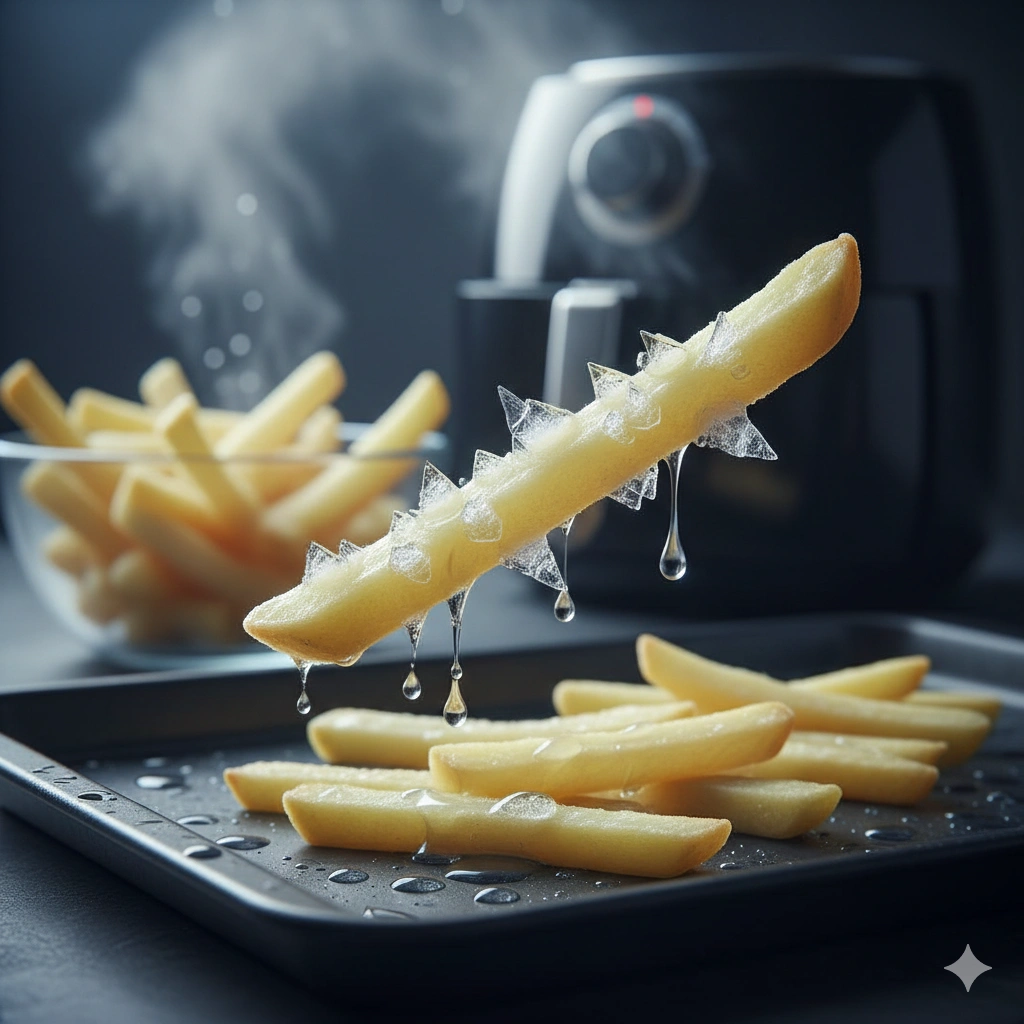
Sometimes frozen french fries develop small ice crystals due to freezer humidity. This surface frost melts instantly when frying and adds excess water not good for crispiness!
Simply shake off the frost or pat lightly with a cloth to remove extra ice. This prevents the fries from splattering oil and helps them achieve a crispier bite. Keeping the surface dry is a simple yet powerful way to enhance crispy fries output.
The double frying method is a restaurant secret loved globally. It works like magic for getting extra crispy french fries:
First fry: Cook fries at a slightly lower temperature (around 160°C) until soft but not golden.
Second fry: Increase heat to 190°C and fry again until perfectly crisp.
This two-step process removes moisture more effectively, resulting in truly crunchy fries that stay crisp longer. Chefs prefer this technique because it enhances texture without needing additional coatings.
Oil plays a major role in achieving crispiness. Oils with high smoke points like sunflower, canola, peanut, or vegetable oil are ideal for making fried french fries. They maintain temperature better and allow fries to cook evenly.
Avoid oils with strong flavors as they can overpower the natural potato taste. Neutral oils also help maintain the signature crisp outer layer that people expect from quality frozen fries.
Right after removing fries from the oil, shake the frying basket vigorously for a few seconds. This removes excess oil, which otherwise settles and softens the outer layer.
This habit is followed in most QSRs because it helps maintain crunch, reduces greasiness, and improves overall texture. Whether you're cooking at home or commercially, this quick step boosts your chances of achieving crispy french fries every time.
Crispy fries are best enjoyed immediately after frying. The longer they sit, the more moisture accumulates on the surface, making them limp.
If you need to hold fries, keep them on a wire rack in a warm oven (around 200°F / 95°C) to preserve crispness without drying them out.
Adding salt or seasoning before frying is a common mistake. Salt draws moisture out of the potatoes, and this can make the fries softer.
Season fries after they come out of the oil while they are still hot. This helps flavors stick better and prevents sogginess. Whether you prefer simple salt or paprika mixes, post-fry seasoning always produces the best crispy fries.
If you want fries to stay exceptionally crisp, dust them lightly with cornstarch or rice flour just before frying. This creates a thin outer shell that hardens beautifully in hot oil.
This technique is especially useful for homemade air fryer fries, where a starch coating can mimic the crunch of deep-fried versions without extra oil. It's a professional hack you’ll see in many restaurant kitchens.
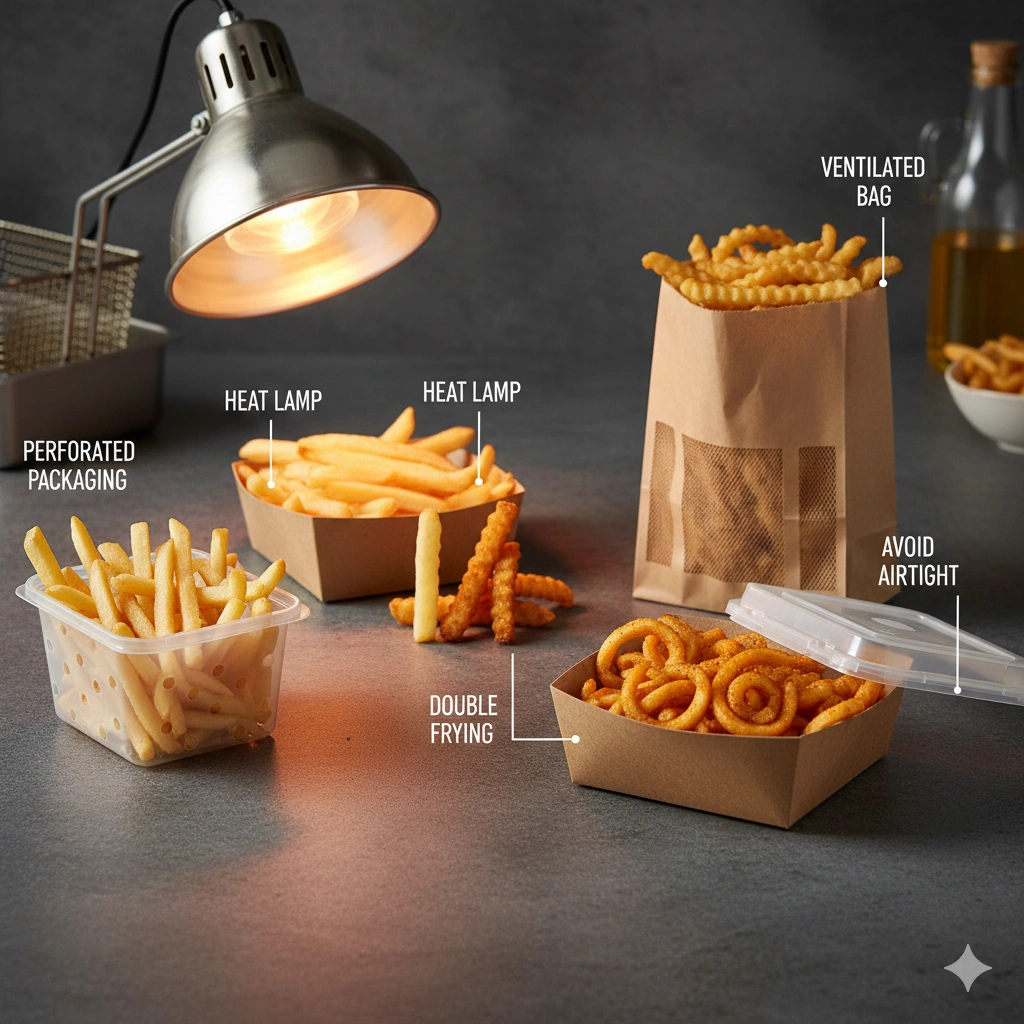
Restaurants rely on several expert techniques to maintain crunch even when fried french fries travel long distances. Their methods focus on controlling steam, airflow, and moisture so fries remain crisp until they reach the customer.
Perforated packaging prevents steam buildup and keeps fries from turning soggy.
Heat lamps maintain surface dryness, helping fries retain their crispy texture.
Double frying method creates a stronger outer crust that stays crisp longer during delivery.
Ventilated delivery bags balance heat and airflow, reducing moisture retention.
Avoiding airtight containers ensures fries cool evenly without sweating.
These techniques allow restaurants to deliver crispy fries even after 20–30 minutes. At home, you can apply similar tricks by placing fresh fries in vented containers instead of sealing them tightly. This small change stops steam from softening your frozen french fries and helps preserve the crunch for a longer time.
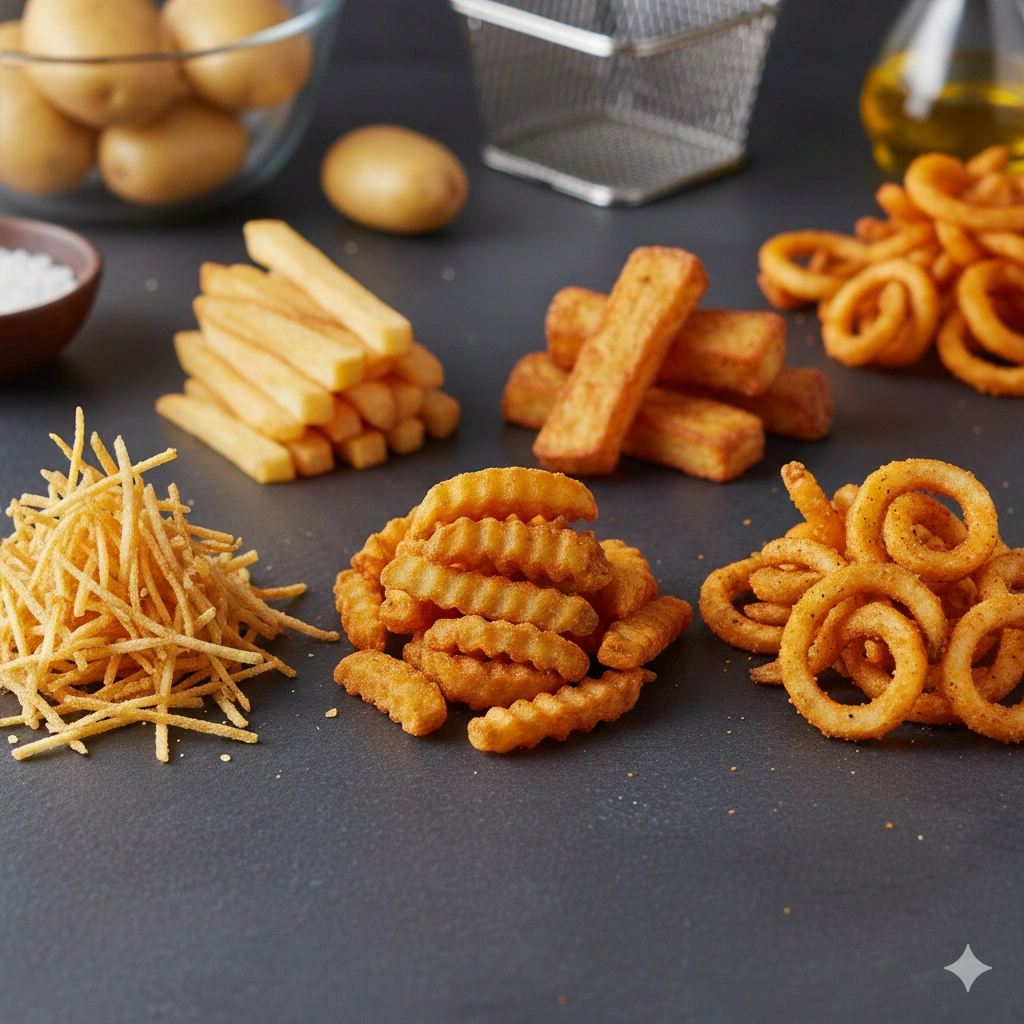
Different fry shapes behave differently in hot oil, and choosing the right cut can dramatically affect the crispiness of your frozen french fries. Each shape offers a unique texture based on thickness, surface area, and frying time.
Shoestring fries cook quickly and become instantly crunchy due to their thin cut.
Straight-cut fries offer balanced crispiness, making them a favorite for home cooking.
Crinkle-cut fries stay crispy longer because the ridges increase surface area.
Thick-cut fries need precise oil temperature to avoid becoming soft inside.
Seasoned or coated fries naturally crisp better due to their light exterior coating.
Understanding how each shape absorbs heat helps you select the right type for your needs. If you love crunchy fries, go for thin or crinkle cuts. If you prefer a softer inside with a crisp exterior, straight-cut fries are ideal. With the right oil temperature for fries, any shape can turn beautifully golden and crunchy.
Even when using premium frozen fries, a few common mistakes can ruin the final texture and prevent your fries from becoming perfectly crispy. Avoiding these errors significantly improves the quality of your crispy french fries.
Reusing oil too many times lowers frying quality and leads to uneven browning.
Overcrowding the pan or fryer traps steam, causing soft and soggy fries.
Using oils with low smoke points burns fries faster and affects texture.
Seasoning too early draws moisture out, making fries lose their crunch.
Draining fries on paper towels traps steam and softens the outer crust.
By avoiding these pitfalls, you can dramatically improve the results of your fried french fries. Maintaining consistent heat, choosing the right oil, and letting fries rest on a wire rack ensure that your extra crispy french fries stay crunchy and delicious every single time.
If you want consistently crispy, high-quality frozen french fries, choosing the right brand matters as much as choosing the right frying technique. ChillFill Foods is known for supplying expertly processed, pre-fried, and quick-freeze fries that retain texture even after long frying cycles.
ChillFill’s frozen fries are designed to respond well to both the deep fryer and the air fryer, making them a reliable choice for restaurants, cafés, food trucks, and home kitchens. With superior potato selection, standardized cuts, and optimized coating, ChillFill Foods ensures you get fries that are naturally crispy, flavorful, and stable during serving and delivery.
When quality matters, ChillFill Foods helps you achieve perfect, crunchy fries with minimal effort.
Achieving consistently crispy fries is not difficult once you understand the science behind moisture, temperature, and technique. Whether you're using the double frying method, relying on a commercial deep fryer, or experimenting with air fryer fries, these 10 pro tips will help you master the art of making extra crispy french fries every time.
By avoiding common mistakes, managing temperature carefully, and choosing high-quality frozen fries, you can enjoy restaurant-style results at home. And for the best experience, pairing top-grade fries like those from ChillFill Foods with the right frying techniques ensures you never settle for soggy fries again.
Fry the fries directly from frozen, keep the oil hot, and use the double frying method for maximum crunch.
Yes, deep fryer fries stay crispier because the oil temperature stays stable and cooks fries evenly.
Keep the oil between 175°C–190°C for perfectly crispy fries.
No, never thaw them frying from frozen helps them stay crispy.
Let them rest on a wire rack, not paper towels, and avoid sealing them in airtight containers.