Leading Potato Frozen Food Products Manufacturer
16 April, 2024
The demand for convenient meal solutions is growing worldwide as people look for quick and easy food options that fit busy lifestyles. Ready-to-eat meals have become a major part of modern food consumption, especially in urban markets and retail chains.
One important discussion in the industry is Frozen Food vs Chilled Ready Meals. Both options offer convenience, but they differ in storage, shelf life, distribution, and consumer preferences. Frozen meals are known for longer storage and wider export opportunities, while chilled ready meals are often associated with freshness and short-term use.
Food manufacturers such as Chillfill Foods are adapting to these changing market trends by offering a variety of ready meal solutions. Understanding the difference between these categories helps businesses and consumers make better choices in the evolving ready meals market.
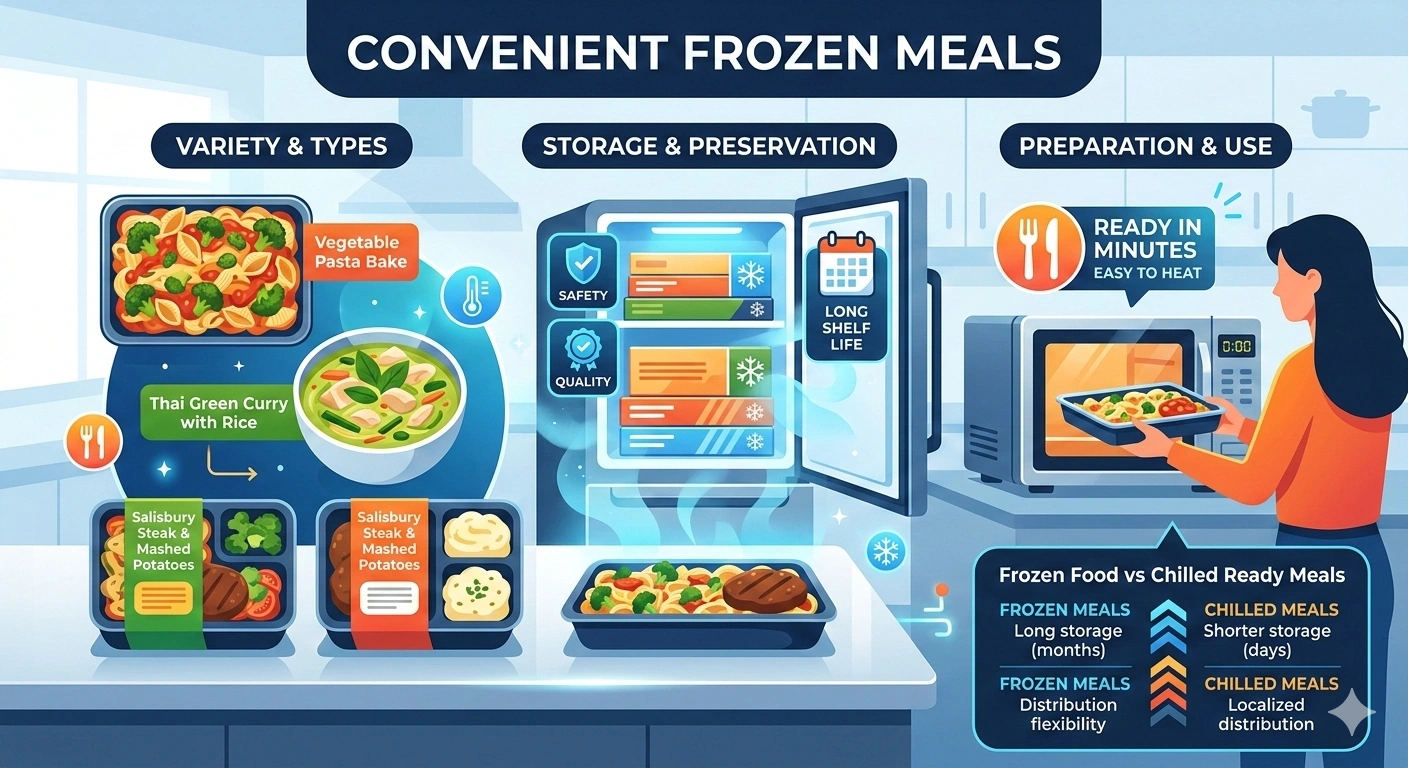
Frozen food meals are fully or partially cooked food products that are preserved through controlled freezing and stored at sub-zero temperatures to maintain safety and quality. These meals are designed for convenience, offering consumers ready-to-heat solutions without compromising taste or nutrition. As part of the broader Frozen Food vs Chilled Ready Meals discussion, frozen meals stand out for their long storage life and distribution flexibility.
The production of frozen meals typically begins with ingredient selection, cleaning, cutting, cooking, and portioning under strict hygiene standards. After preparation, meals are rapidly frozen to lock in texture, flavor, and nutrients. Packaging is done using moisture-resistant and temperature-stable materials to ensure product integrity during storage and transportation.
Manufacturers follow food safety protocols such as HACCP and temperature-controlled handling to prevent contamination. This structured production process makes frozen food meals suitable for both domestic retail and international export markets.
One of the key innovations in frozen food ready meals is flash freezing, also known as Individual Quick Freezing (IQF). This method rapidly lowers the temperature of food within minutes, preventing the formation of large ice crystals. Smaller ice crystals help maintain cellular structure, which preserves texture and nutritional value.
Flash freezing reduces the need for artificial preservatives because low temperatures naturally slow microbial growth. As a result, healthy frozen meals often retain vitamins, minerals, and protein content effectively when compared to other preservation methods.
Shelf life is one of the strongest advantages in the Frozen vs Fresh Ready Meals comparison. Frozen meals can typically last from six months to one year when stored properly. This extended shelf stability minimizes food waste and offers retailers better inventory management.
For exporters and large-scale distributors, longer shelf life means easier global shipping and reduced risk during transit delays. This logistical advantage plays a major role in the Ready Meals Market Comparison, particularly for regions lacking advanced cold storage infrastructure.
The frozen meals segment includes a wide range of products catering to diverse consumer needs:
Frozen vegetables
Frozen meat dishes
Frozen snacks and appetizers
Ready-to-cook gravies and curries
Healthy frozen meals focused on balanced nutrition
Demand for plant-based frozen food meals is also rising as consumers seek protein-rich and diet-specific options.
The Frozen Food Ready Meals segment has witnessed consistent global expansion. Urbanization, dual-income households, and the rise of organized retail chains have fueled demand. E-commerce grocery platforms further support growth by offering temperature-controlled delivery services.
In emerging markets, frozen meals are becoming increasingly popular due to improved cold chain infrastructure. As the Frozen Food vs Chilled Ready Meals debate continues, frozen products remain a dominant force because of scalability, safety, and export viability.
This growth trend indicates strong long-term potential for manufacturers and suppliers looking to expand in international markets.
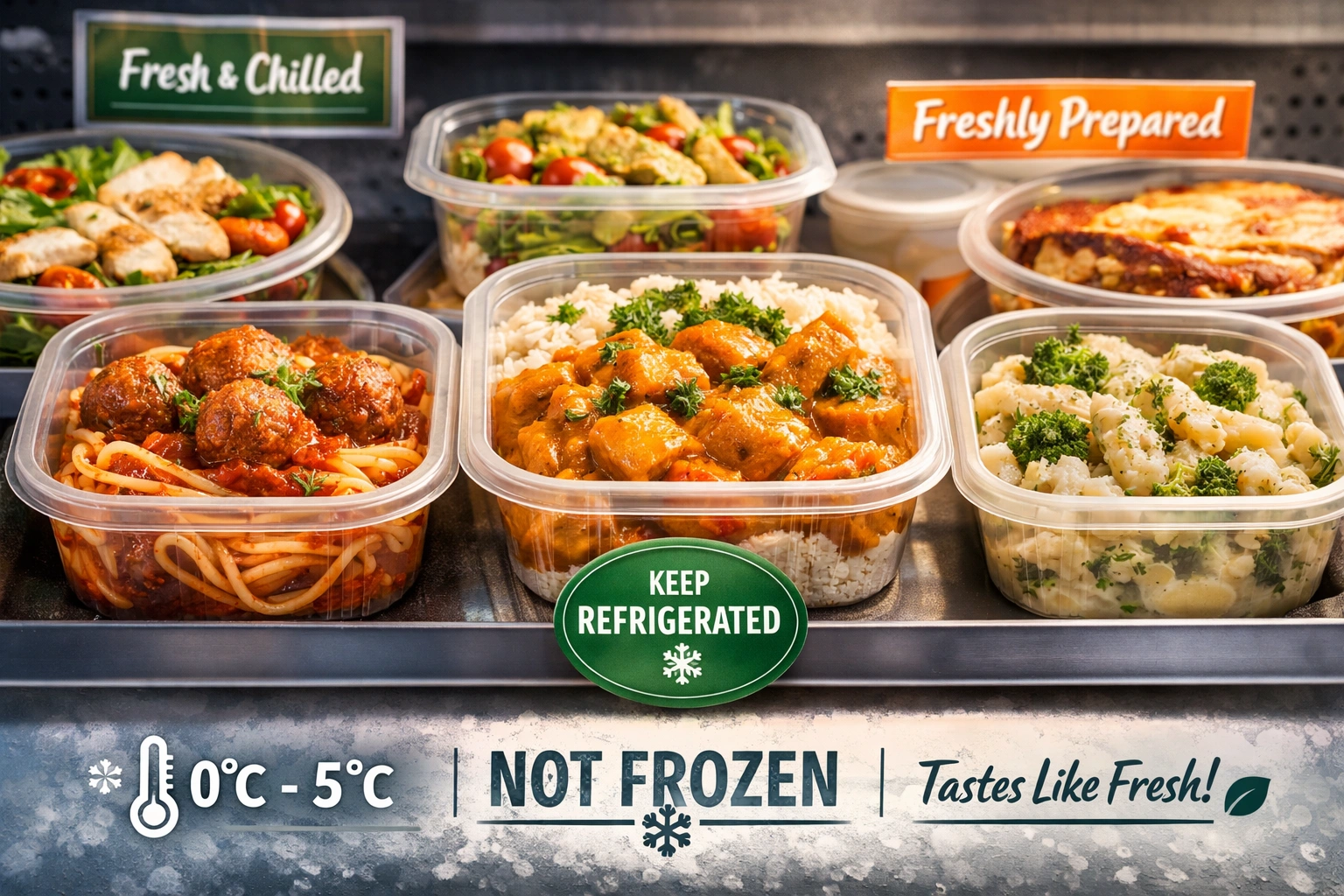
Chilled ready meals are freshly prepared, cooked food products that are stored at refrigerated temperatures, typically between 0°C and 5°C. Unlike frozen meals, these products are not subjected to deep freezing. Instead, they rely on controlled refrigeration to maintain freshness and safety for a shorter period. In the broader discussion of Frozen Food vs Chilled Ready Meals, chilled products are often positioned as a premium, fresh-tasting alternative.
Chilled ready meals are fully cooked and packed in sealed containers, trays, or modified atmosphere packaging. They must be continuously stored under refrigeration from production to retail display and consumer purchase.
Maintaining an uninterrupted cold chain is essential. Even minor temperature fluctuations can reduce shelf life or increase food safety risks. This strict storage requirement makes chilled convenience meals more dependent on advanced logistics systems.
One of the defining characteristics of chilled ready meals is their shorter shelf life, typically ranging from 3 to 10 days. Because they are not frozen, they are often perceived by consumers as fresher and closer to homemade food.
This perception plays a significant role in the Chilled Ready Meals Market, especially in urban supermarkets and premium grocery stores. Consumers seeking “fresh ready-to-eat” options often gravitate toward refrigerated shelves rather than freezer sections.
The production process for chilled ready meals involves careful cooking, rapid cooling, and hygienic packaging. Many manufacturers use modified atmosphere packaging (MAP) to slow bacterial growth and extend freshness slightly without using heavy preservatives.
Strict quality control measures, microbial testing, and temperature monitoring are crucial throughout the supply chain. Compared to frozen food meals, chilled products require faster distribution to maintain optimal quality.
Chilled convenience meals cover a wide variety of offerings, including:
Fresh pasta dishes
Ready-to-eat salads and grain bowls
Refrigerated curries and rice combinations
Premium protein-based meals
Gourmet and chef-inspired meal trays
These products are often marketed as healthier or fresher alternatives within the Ready Meals Market Comparison, even though their nutritional profile depends on ingredients and preparation methods.
The Chilled Ready Meals Market has grown steadily in developed regions where retail refrigeration infrastructure is well established. Supermarkets, hypermarkets, and urban convenience stores are key distribution channels.
Growth is particularly strong in metropolitan areas where consumers value speed and freshness. However, expansion into export markets is more limited compared to frozen meals due to shorter shelf life and strict cold chain dependency.
As the Frozen Food vs Chilled Ready Meals comparison continues, chilled products remain attractive for domestic retail but face scalability challenges in long-distance distribution.
|
Comparison Factor |
Frozen Food Meals |
Chilled Ready Meals |
|
Definition |
Fully or partially cooked meals preserved through deep freezing (–18°C or below). |
Freshly prepared cooked meals stored under refrigeration (0°C to 5°C). |
|
Shelf Life |
6–12 months when properly stored. |
3–10 days under refrigeration. |
|
Storage Requirement |
Deep freezer storage required. |
Continuous refrigeration required. |
|
Distribution Flexibility |
Suitable for long-distance and export markets due to extended stability. |
Best suited for local or regional distribution due to short shelf life. |
|
Cold Chain Dependency |
Requires frozen transport but more stable once frozen. |
Highly sensitive to temperature fluctuations during transport. |
|
Nutritional Retention |
Flash freezing helps preserve vitamins and minerals effectively. |
Perceived as fresh, but nutrition depends on ingredient handling and storage time. |
|
Food Safety Stability |
Freezing significantly slows microbial growth, enhancing safety. |
Safe under strict refrigeration but more vulnerable to misuse. |
|
Production Scalability |
Allows bulk manufacturing and long-term inventory management. |
Requires smaller batch production with quick market turnover. |
|
Cost Efficiency |
Lower wastage and better cost control in large-scale operations. |
Higher logistics and faster distribution costs. |
|
Consumer Perception |
Viewed as convenient, long-lasting, and increasingly healthy. |
Viewed as fresher and premium in retail settings. |
|
Export Suitability |
Highly suitable for international shipping and global trade. |
Limited export potential due to shelf life constraints. |
|
Market Growth Driver |
Growing demand for healthy frozen meals and global distribution ease. |
Growth driven by urban retail and premium chilled convenience meals. |
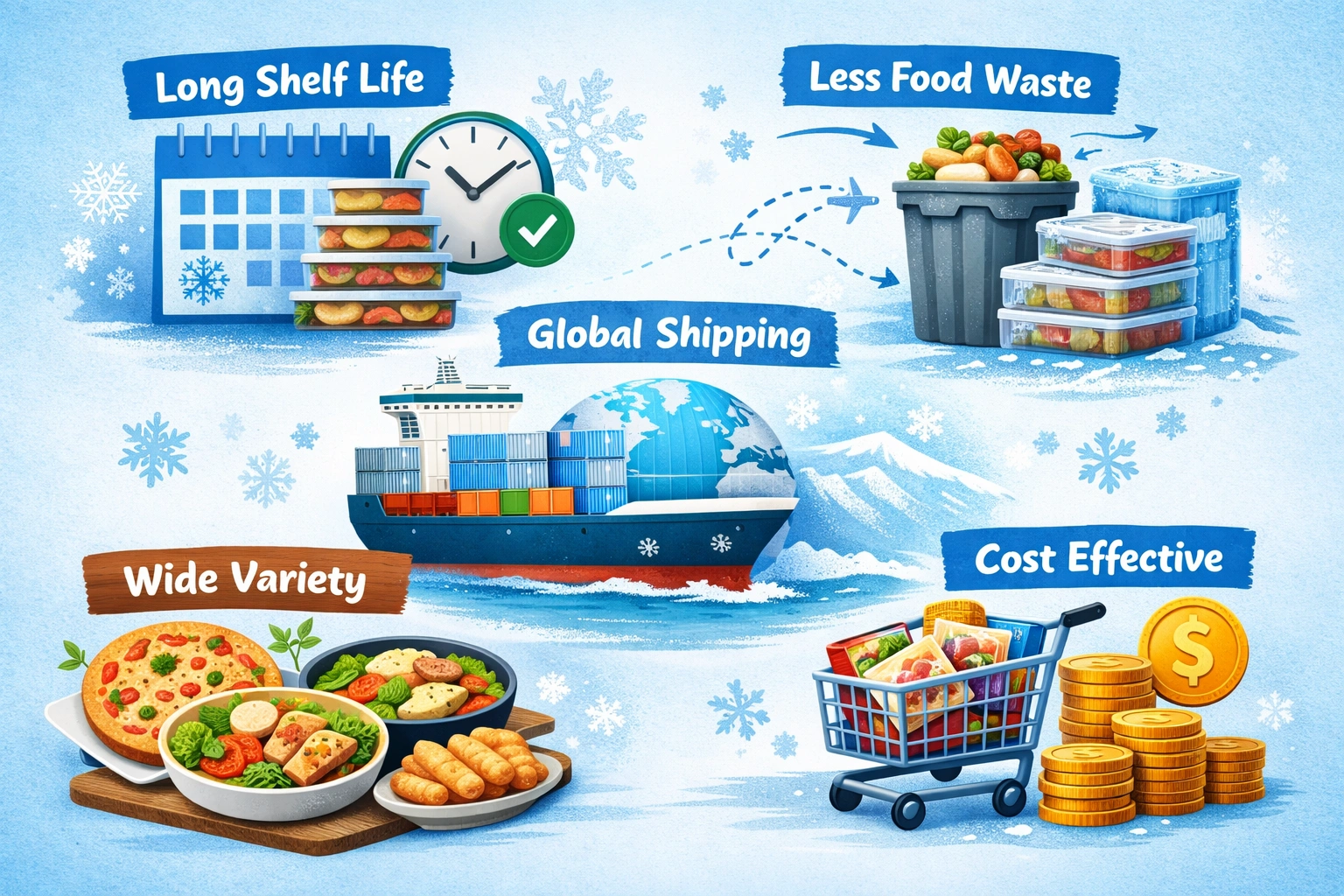
Long Shelf Life: Frozen food ready meals can be stored for extended periods without losing quality when kept at the correct temperature.
Reduced Food Waste: Longer storage time helps households and retailers minimize food spoilage and waste.
Easier Global Distribution: Frozen meals are suitable for international shipping and export due to stable preservation conditions.
Wide Product Variety: The category includes many options such as frozen snacks, frozen meals, and healthy frozen meals to meet different consumer preferences.
Cost-Effective for Retailers: Bulk storage, longer shelf stability, and efficient logistics make frozen meals a practical option for supermarkets and distributors.
Perception of Freshness: Chilled convenience meals are often viewed as closer to freshly prepared food, which attracts quality-focused consumers.
Short Preparation Time: These meals are typically ready to heat and eat, making them ideal for quick meal solutions.
Premium Market Positioning: Many chilled ready meals are marketed as premium products with high-quality ingredients and better presentation.
Growing Demand in Urban Grocery Chains: Urban supermarkets and modern retail stores are increasing their refrigerated ready meal sections to meet consumer demand.
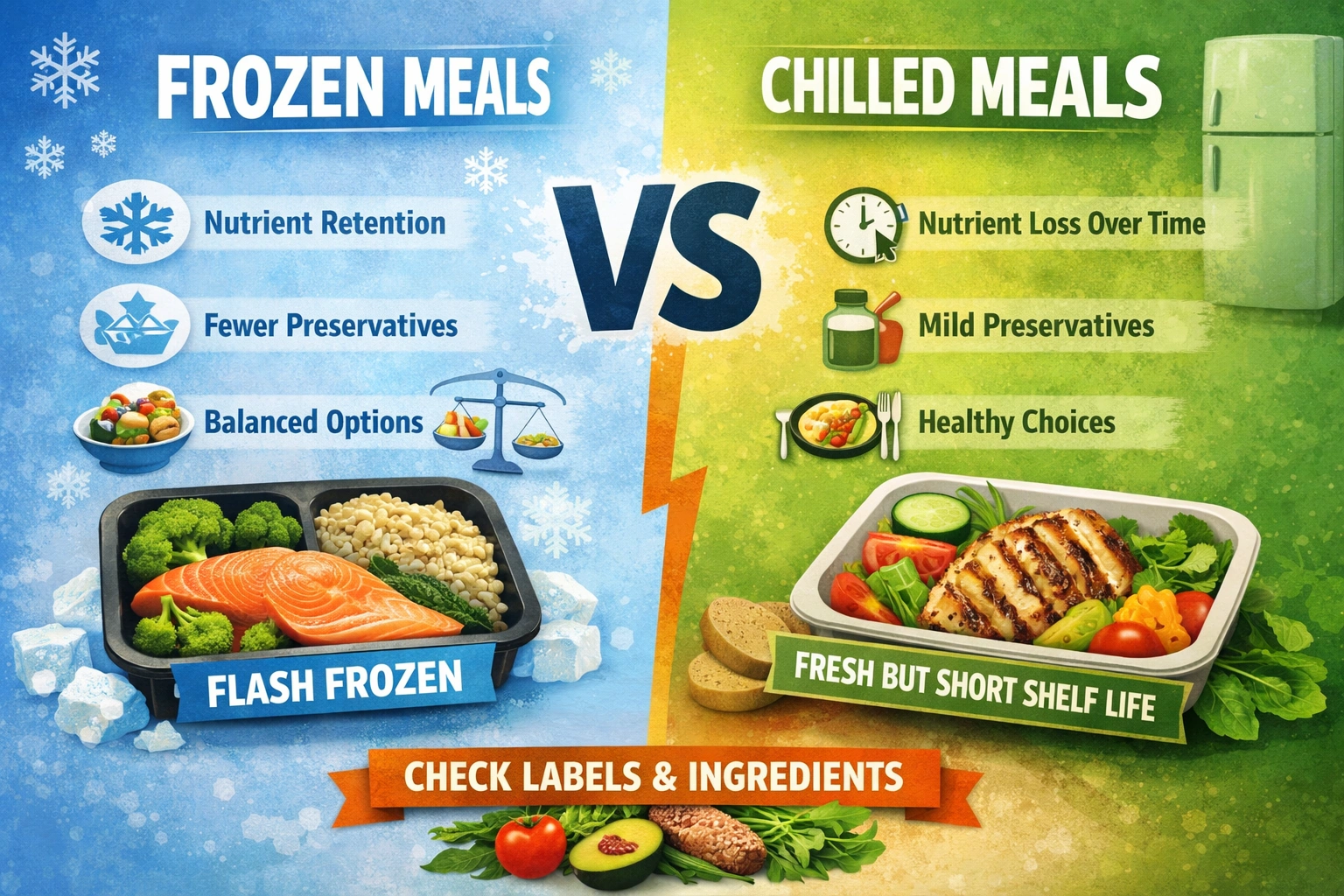
One of the most common questions in the Frozen Food vs Chilled Ready Meals debate is about health. Consumers often assume that chilled meals are automatically fresher and healthier, while frozen meals are processed and less nutritious. However, the reality is more nuanced. Both segments can offer balanced nutrition depending on ingredients, preparation methods, and storage standards.
Freezing technology plays a significant role in preserving nutrients. In frozen food meals, ingredients are typically cooked and then flash frozen quickly. This rapid freezing process helps retain vitamins and minerals by slowing down enzyme activity and microbial growth.
Chilled ready meals, while not frozen, may experience gradual nutrient degradation over time because they are stored above freezing temperatures. The longer they remain on shelves, the more nutrient loss can occur. In many cases, healthy frozen meals can retain comparable or even higher nutrient levels if frozen immediately after cooking.
Another common perception in the Frozen vs Fresh Ready Meals comparison is that frozen products contain more preservatives. In reality, freezing itself acts as a natural preservation method. Because extremely low temperatures inhibit bacterial growth, frozen meals often require fewer chemical preservatives.
Chilled ready meals may use mild preservatives or modified atmosphere packaging to extend shelf life. While these methods are regulated and safe, consumers sometimes associate them with artificial processing. The key factor is ingredient transparency and labeling rather than storage method alone.
Calories are determined by ingredients, portion size, and recipe formulation, not whether a meal is frozen or chilled. Both frozen meals and chilled convenience meals can be high-calorie indulgent options or balanced, protein-rich, low-fat choices.
Today’s manufacturers are increasingly offering healthy frozen meals with controlled calorie counts, added fiber, and reduced sodium. Similarly, premium chilled ready meals often highlight clean-label and macro-balanced recipes. In the broader Ready Meals Market Comparison, nutritional value depends more on formulation strategy than preservation method.
Many consumers believe that freezing destroys food quality. However, modern flash-freezing technology preserves texture and flavor effectively. On the other hand, the assumption that chilled always means “fresh and healthier” is not universally accurate.
In the Frozen Food vs Chilled Ready Meals discussion, the healthier choice ultimately depends on ingredient sourcing, cooking standards, and nutritional formulation. Both categories can support balanced diets when produced under strict quality control and consumed responsibly.
Understanding these factors helps consumers and buyers make informed decisions based on science rather than perception.
The comparison of Frozen Food vs Chilled Ready Meals shows that both categories have strong demand in the modern food industry. Frozen meals are valued for their longer shelf life and global distribution advantages, while chilled ready meals are preferred for their fresh-style appeal and quick consumption.
The ready meals market is expected to grow as consumer demand for convenient food continues to increase. For businesses and retailers, selecting the right category depends on target customers, logistics, and market demand.
Companies like Chillfill Foods are exploring new opportunities in both frozen and chilled meal segments, helping expand the future of the ready meals industry.
Frozen meals are stored at deep-freeze temperatures and last for months. Chilled ready meals are refrigerated and usually last only a few days. Frozen meals are better for long-distance distribution, while chilled meals suit short-term retail sales.
Both can be healthy depending on ingredients and preparation. Flash freezing helps retain nutrients, while chilled meals offer fresh taste appeal. The healthier choice depends on formulation, not storage method.
Frozen meals are expanding strongly due to export flexibility and longer shelf life. The Chilled Ready Meals Market is growing steadily in urban retail areas with strong cold-chain infrastructure.
Modern freezing preserves most vitamins and minerals. Nutrient loss depends more on cooking and storage time than freezing itself.
Both are safe when stored correctly. Frozen meals are more stable over time, while chilled meals require strict refrigeration to maintain safety.