Leading Potato Frozen Food Products Manufacturer
16 April, 2024

Choosing the right frozen food partner for HoReCa businesses means evaluating product quality, food safety certifications, cold chain logistics, and supply reliability. Hotels, restaurants, cafés, catering companies, and cloud kitchens that get this right gain menu consistency, operational efficiency, and a stronger foundation for long-term growth.
As the global frozen food market continues to grow, the need for dependable supply partners is becoming even more important. According to industry research, the global frozen food market is projected to reach USD 841.5 billion by 2033, driven by rising demand from both retail and foodservice sectors. This highlights the growing role of reliable frozen food manufacturers in supporting HoReCa businesses with consistent quality and uninterrupted supply.
This guide covers what HoReCa procurement managers need to evaluate before committing to a frozen food partner, from food safety and cold chain logistics to the key difference between a manufacturer and a trading company.
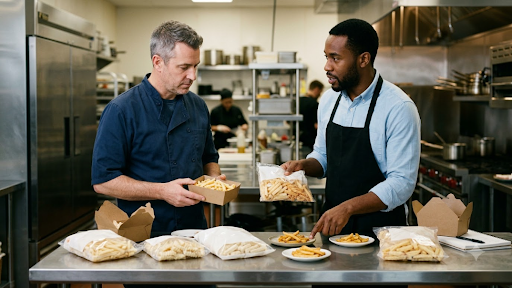
The supplier you work with directly affects how your kitchen functions every day. Here is why this decision matters.
Use this checklist when evaluating any frozen food exporter.
Product consistency is not just a quality metric. It is an operational requirement.
When a hotel kitchen or QSR chain orders frozen french fries or frozen potato products, every batch must behave predictably during cooking. Inconsistent cut sizes or moisture content disrupt cooking times and plate presentation.
Standardized recipes depend on standardized inputs. Consistent products protect food cost and customer experience simultaneously, reducing waste and enabling faster kitchen operations. For high-volume HoReCa businesses, partnering with a manufacturer that processes products with zero preservatives and meets global quality standards delivers the reliability that premium service demands.
Working with an uncertified supplier introduces legal, operational, and reputational risks that no cost saving can justify.
Key certifications and practices to verify:
For international procurement managers, verifying alignment with Codex Alimentarius guidelines and export certifications such as APEDA protects against supply chain and regulatory risks.
Cold chain integrity is the backbone of frozen food quality. A product can leave the facility in perfect condition and still arrive compromised if temperature management fails during transit.
For HoReCa businesses operating across multiple locations, a foodservice supplier with multi-city cold chain infrastructure is a direct operational advantage.
ChillFill Foods is a frozen food manufacturer built for HoReCa businesses, combining farm-to-fork sourcing, modern IQF processing, and a product range designed for foodservice performance.
Every ChillFill product is 100% vegetarian, made with zero preservatives, and processed to deliver consistent texture, taste, and portion quality across every batch. From classic frozen french fries to specialty cuts and seasoned wedges, ChillFill's frozen potato product range is built for hotels, restaurants, cafes, QSR chains, catering companies, and cloud kitchens.
ChillFill also offers customizable solutions, including bespoke cuts, portion sizes, and packaging formats, with year-round supply and constant pricing that reduces procurement risk for high-volume buyers.
Selecting a frozen food partner is a strategic decision. Product quality, food safety, cold chain logistics, and reliable supply all shape your kitchen's daily performance and your long-term business trajectory. The lowest-price supplier and the right supplier are rarely the same.
ChillFill Foods offers a full range of frozen potato products for HoReCa operations, with consistent quality, customizable solutions, and year-round supply built for hotels, restaurants, cafes, catering companies, and QSR chains. Explore the full product range or contact the ChillFill team to discuss your requirements.
HoReCa businesses should look for consistent product quality, reliable supply, food safety compliance, IQF manufacturing capability, cold chain logistics, and customization options.
Product consistency helps standardize recipes, control portions, reduce food waste, and maintain a consistent guest experience.
A reliable cold chain helps maintain frozen food at the required temperature, preserving its texture, quality, shelf life, and safety from production to delivery.
Direct sourcing can provide better traceability, quality control, customization, and supply reliability compared with sourcing through intermediaries.
Suppliers should meet applicable FSSAI requirements and follow recognized food safety systems such as HACCP. ISO 22000 and relevant APEDA registration can further support domestic and international procurement.
A reliable long-term partner can provide consistent quality, scalable supply, stable pricing, faster support, and customized products as the HoReCa business grows.